Latest articles
Thank you! Your submission has been received!
Oops! Something went wrong while submitting the form.
What is token engineering?
Token engineering connects AI coding costs to results. Learn how to measure spending, optimize model routing and context, and enforce usage policies.

The speed trap facing software teams is what Token Engineering was designed to solve
Faros’s Speed Trap report shows AI delivery accelerating while review controls erode. See how Token Engineering helps teams observe spend, optimize routes, and govern AI-driven software work.

How AI affects developer productivity and engineering workflows
AI coding tools increase developer output, but add strain and cost across the SDLC. Explore the latest research on AI and developer productivity.
The most expensive number in our new AI Engineering report
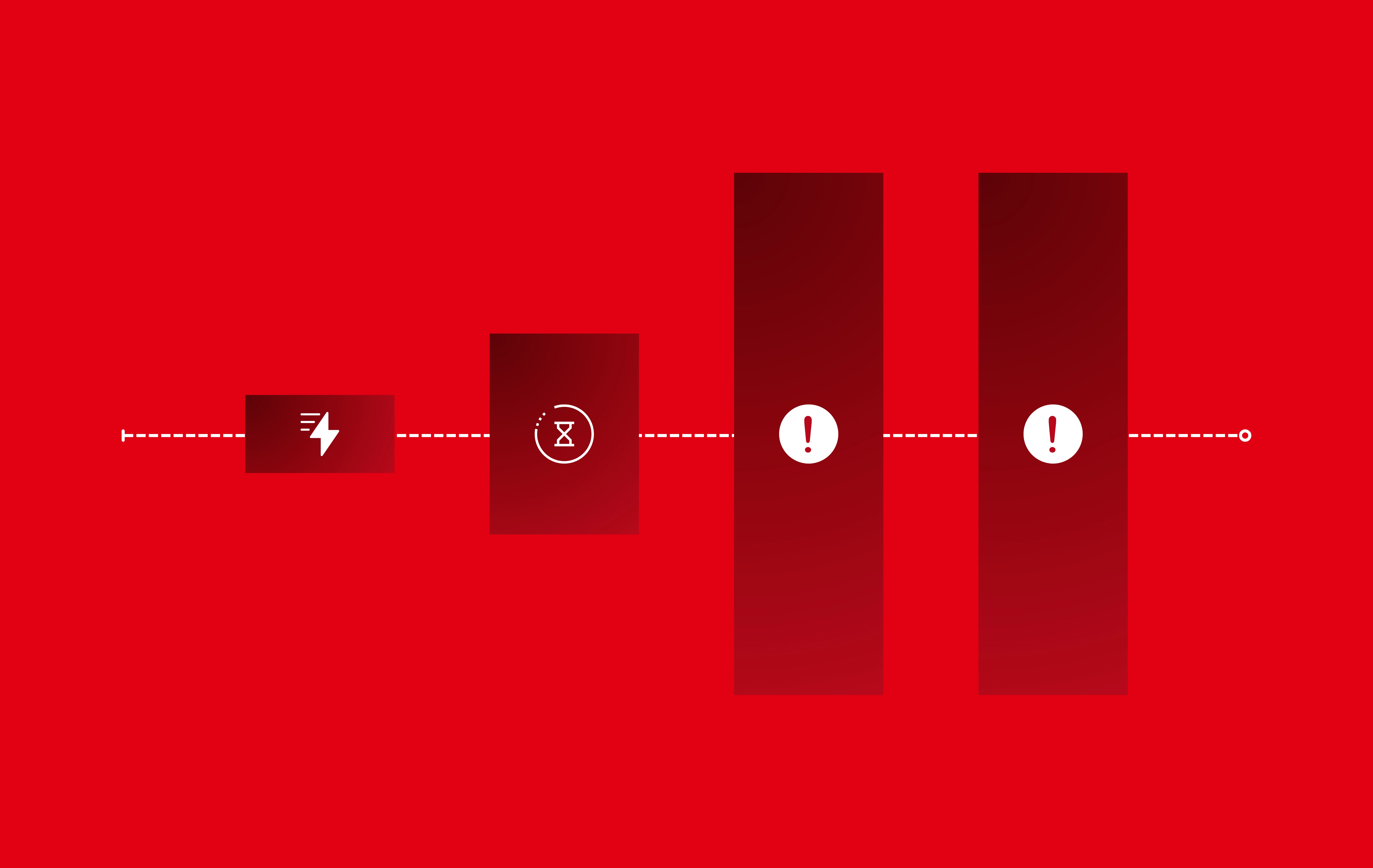
A restarted task is paid for twice, once for the wrong output and once for the fix. Restarts per developer are up 66.7%, and finding the error adds hours.
The case for bringing AI classification on-device
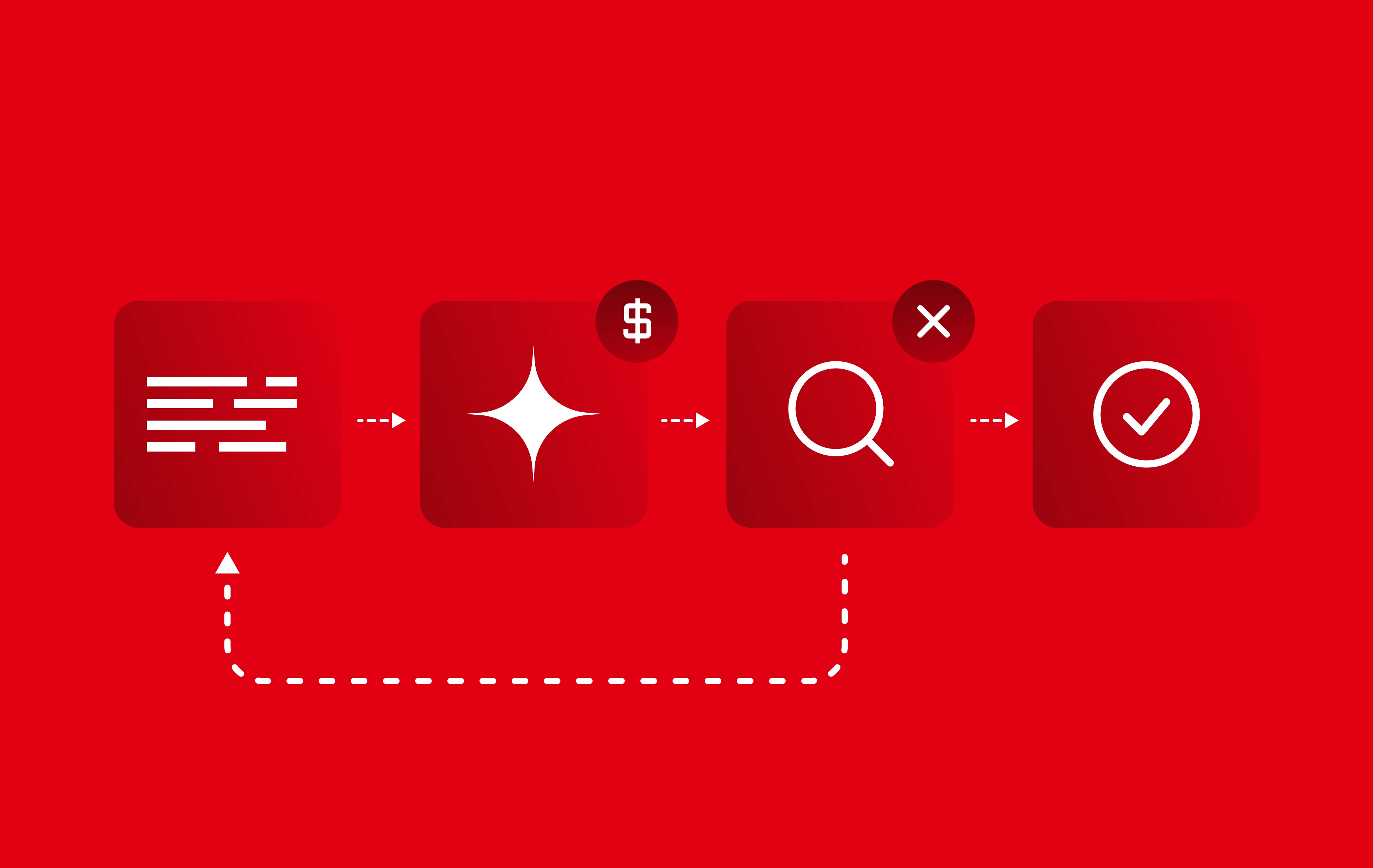
Understanding AI spend means knowing what the work was. Faros tested whether an open model can label sessions by activity locally, keeping conversations in-house.
An open source team barred AI code. Our data shows a better fix.
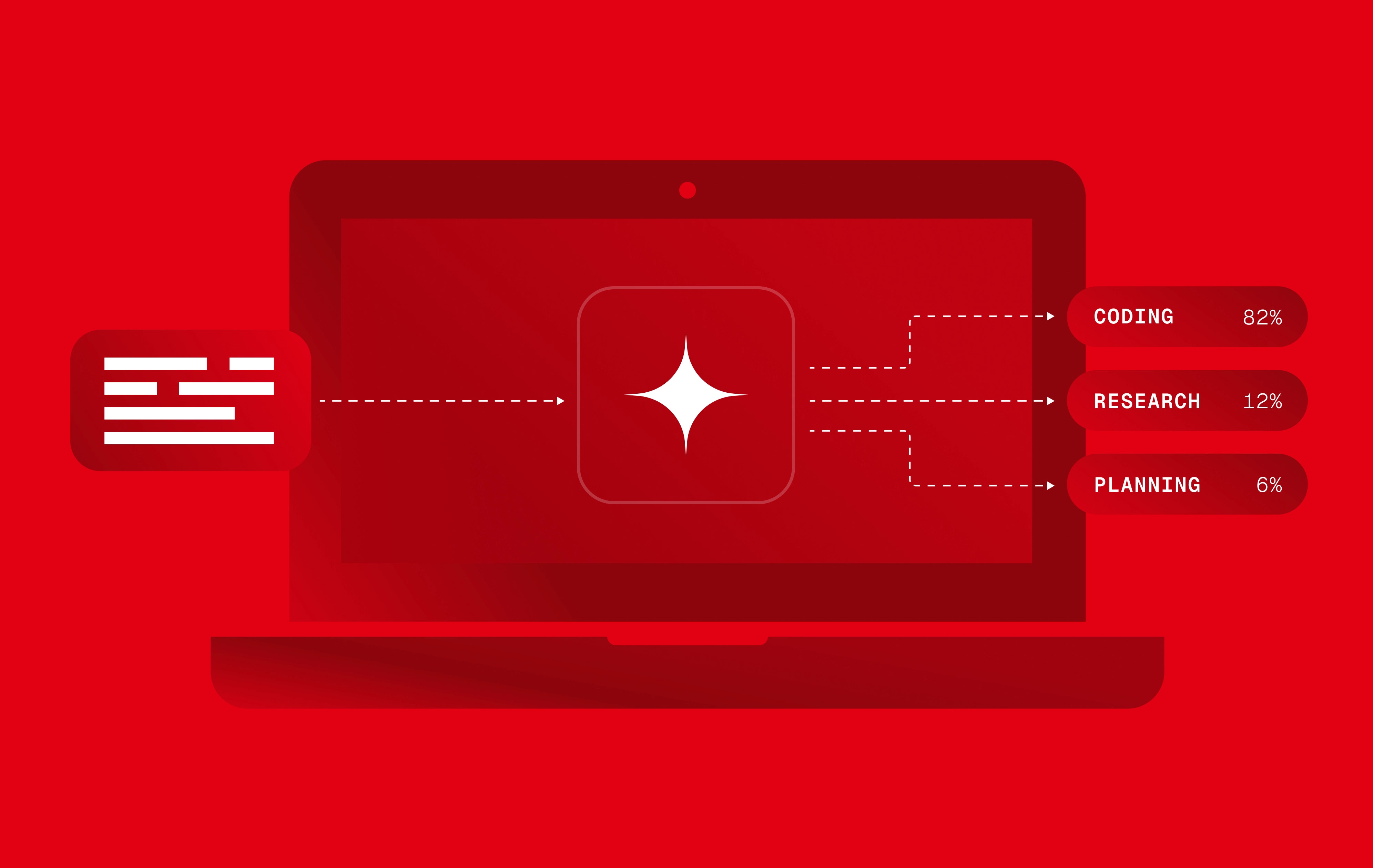
Restrictions on AI-generated code are spreading across open source projects as review queues overflow. Our Speed Trap report shows what that costs teams and what to do instead.
What is an AI-native engineering organization?
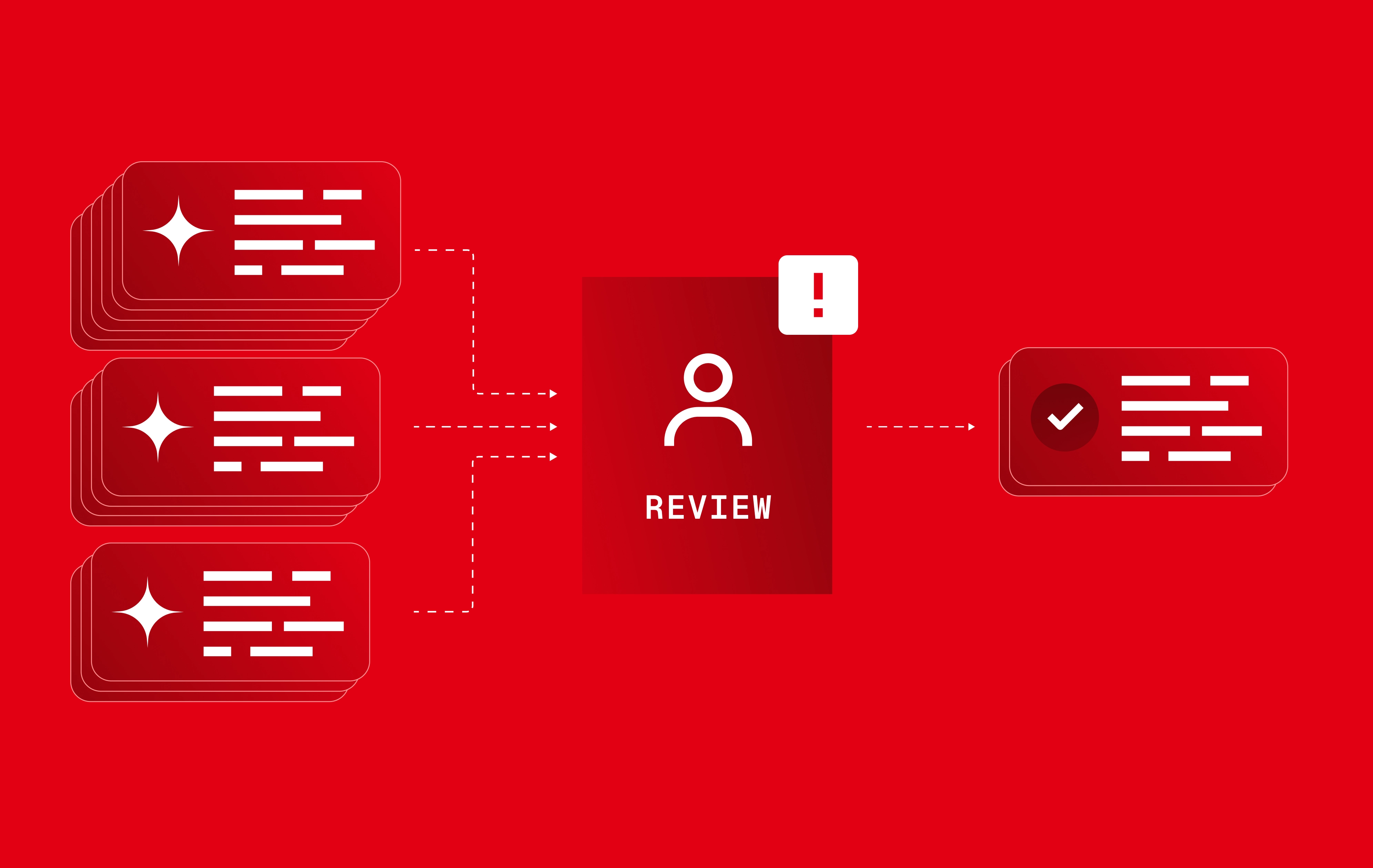
AI-native engineering organizations build software delivery around AI agents. See the six characteristics that separate AI-native from AI-assisted software development.

Your AI bill doesn't tell you what you think it does
Six webinar takeaways from Faros CEO Vitaly Gordon on measuring AI spend by cost per outcome, setting smarter quotas, and choosing models using your own code.

What is a work restart? Why AI is driving them up 66.7%
A work restart is a task sent back to development after review, QA, or deployment. Learn what restarts cost in developer time and AI tokens, and how to reduce them.
.webp)
Comprehension debt: When AI speed outpaces human understanding
Explore the widening gap between what gets shipped and what devs understand. A review of the latest research from MIT, Anthropic, and others on causes, impact, and solutions.

Introducing Faros Token Engineering
Stop guessing if AI token spend pays off. Faros Token Engineering traces coding agent usage to shipped features, incidents resolved, and ROI.

Inside Faros Token Engineering: AI Spend Observability
Go beyond token usage with AI spend observability that shows where spend goes, what work ships, and the cost per verified outcome across teams.
.webp)
Inside Faros Token Engineering: AI Route Optimization
Optimize AI coding by routing each task to the right model and harness, using benchmarks from your own merged code to reduce cost per verified outcome.
.webp)
Inside Faros Token Engineering: AI Coding Governance
Govern AI coding across every agent and harness with policies for approved models, quotas, routing, and alerts that control spend without blunt usage caps.
.webp)
The Speed Trap: 8 takeaways from our latest AI engineering research
AI made software development faster, but review gaps, QA bottlenecks, and rising incident volume reveal a new risk: the Speed Trap.

What is a software factory? How it works
Learn how software factories use AI agents, orchestration, evals, and verification to automate engineering workflows and continuously improve software delivery.

How to track AI coding costs across teams
See how to track AI coding costs across teams, connect spend to engineering outcomes, measure cost per verified outcome, and optimize AI spend.
.webp)
Why cheaper AI models can cost more: The hidden model tax explained
Uncover the hidden “model tax” in cheap AI coding models. Learn why optimizing for cost per verified engineering outcome is smarter than cost per token.
.webp)
Why AI coding agents actually fail (it's not the model)
Why do coding agents fail? We analyzed 4,000 errors across 6 models and discovered the real culprits.
.webp)
Routing Claude Code Opus 4.8 requests to GLM 5.2: a five-day live pilot
GLM 5.2 cut direct Claude Code request cost from $0.146 to $0.032 over five days. Why an image compatibility boundary still paused a broader rollout.

Which frontier AI models are actually worth paying for?
Which AI model is worth the spend? Benchmark cost, quality, and runtime on your own merged PRs—not on someone else’s task set. Our method and results.
The AI code quality mirage: What New Relic’s research reveals
New Relic found 94% of leaders rate AI code above human code. Faros’s latest Speed Trap research shows why perceived quality can still mask rising operational strain.

How much do AI coding tools cost?
The true cost of AI coding goes far beyond license fees. See how to budget the full cost of buying, running, and maintaining AI coding tools—plus the costs most models miss.
.webp)
Faros supports the mission of the Open Secure AI Alliance
Faros proudly supports the Open Secure AI Alliance. Faros CEO, Vitaly Gordon, explains why preventing AI lock-in and utilizing open models is crucial for cybersecurity.

The effort halo: How LLM judges reward coding style over correctness
LLM judges give higher scores to certain coding styles, independent of whether the code works. We measured the bias, tested causes, and calibrated for it. See how we did it.

Is intelligent model routing enough to improve AI coding performance?
Evidence from 211 real engineering tasks shows why AI coding performance depends on the full route: model, harness, repository context, and task.
.webp)
AI coding cost optimization: connect spend to outcomes
AI coding costs are exploding, but cutting access kills productivity. Faros observes, optimizes, and governs token spend so you lower cost per outcome without slowing engineers down.
What does productive AI work actually look like?
More AI token spend doesn’t mean better engineering. Our on-demand webinar shows you what productive AI work actually looks like and how to close the gap between AI spend and business value.
.webp)
OpenAI says 30% of SWE-Bench Pro is broken. We saw it first.
The same flaw is hiding in your own backlog, at a higher rate. Here's why graded scoring catches what pass/fail testing misses.

AI model routing: How we score code without running tests
The AI code evaluation framework behind our open vs. frontier model test: rubric-based scoring, a blinded LLM judge, and validation on real SWE-bench data.
.webp)
Best open-weight models for coding
Compare the best open-weight models for coding in 2026—GLM, DeepSeek, Qwen, Kimi and more—and learn when each one can cut your AI coding costs.
.webp)
AI token cost management: Best practices for engineering teams
Learn five strategies to manage and reduce AI token costs in software development, from spend visibility to model routing to context engineering.
Claude Code analytics: What the data can and can't tell you
Claude Code analytics track usage, contribution, and cost. Learn the two ways to collect the data, where it stops, and how to connect it to engineering outcomes.
How to monitor Claude Code token usage
Track Claude Code token usage with built-in commands and community tools, learn what drives consumption up, and connect that spend to what your team shipped.
Open source vs. frontier AI models: Which are best for coding?
Open AI models matched frontier quality at half the cost in Faros's 211-task coding experiment. See the results and build your own model routing policy.

The gap between AI spend and engineering outcomes
Throughput is up, quality is down, and CFOs are asking hard questions. Watch Faros CEO and a McKinsey senior partner unpack the AI engineering gap—and how to close it.
.webp)
Token Intelligence: The missing operating layer for AI
Token intelligence turns raw AI usage into operational context for engineering, finance, and leadership. Here's what it is, why it matters, and how to build it.
How to measure token efficiency in AI engineering
Finance wants to know what AI spend produced. These 3 outcome signals and 11 guardrail metrics give engineering leaders the answer.
.webp)
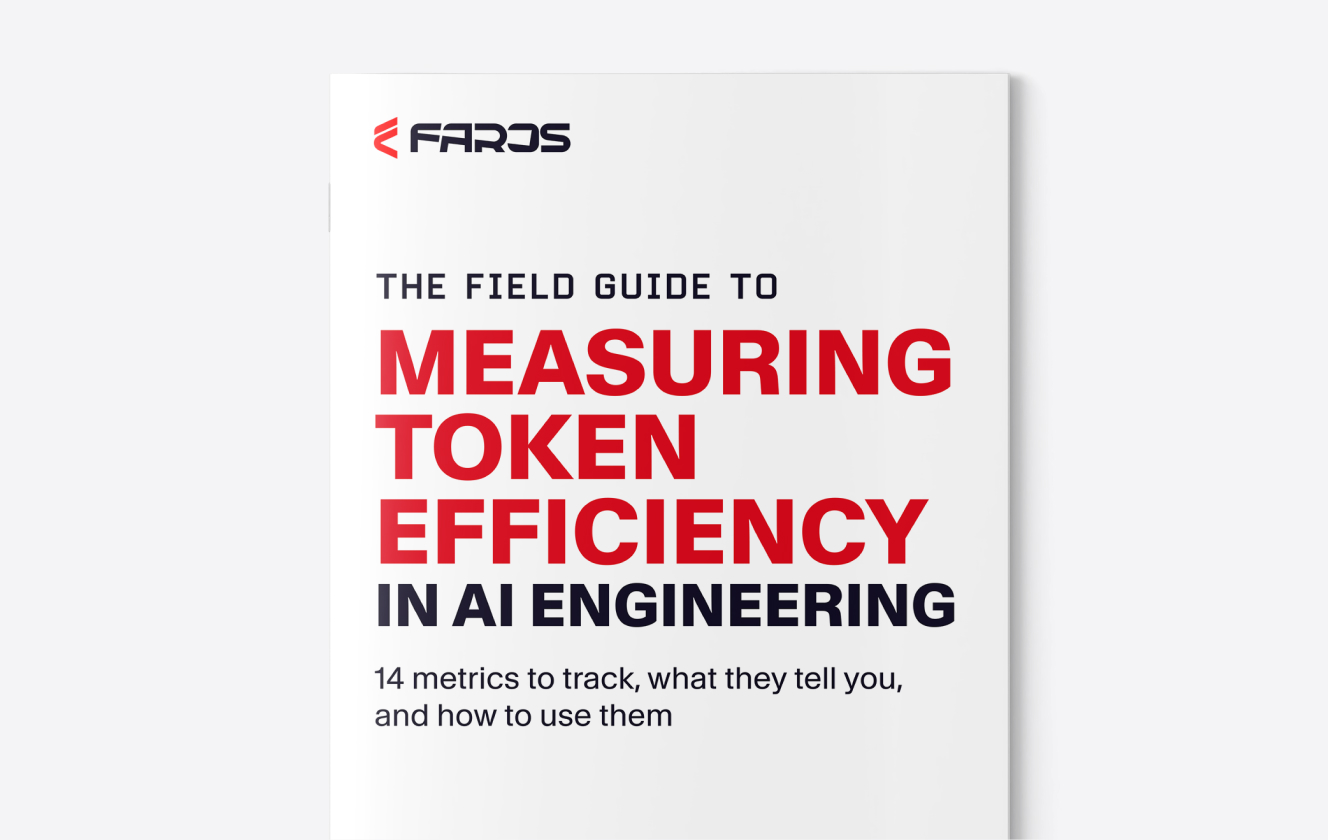
The Field Guide to Measuring Token Efficiency in AI Engineering
Three outcome signals. Eleven guardrail metrics. The measurement framework for engineering leaders who need to connect token spend to shipped outcomes and know what to keep, scope, or cut.
Introduction to Token Intelligence: trace what your AI spend is actually producing
Faros introduces Token Intelligence. Trace every AI token to the work it produced, classify spend by efficiency, and decide which tools and models to keep, scope, or cut. The first step from tokenmaxxing to outcome maxxing.
AI tokenomics: How to manage AI token costs in engineering
Enterprise AI token spend is surging. Learn how AI tokenomics and token intelligence help engineering leaders track, forecast, and control AI costs.
What engineering leaders need to know about Claude Opus 4.8
Claude Opus 4.8 hits 88.6% on SWE-bench and 0% hallucination rate on flawed data. See what else is new across agentic SWE performance, prompt injection resistance, tool use improvements, and evaluation awareness risks.
Harness engineering: A guide to building better AI coding agents
Agent = Model + Harness. Harness engineering is what makes AI agents reliable in production. See the five layers and the metrics that matter.
AI-generated code is creating a code review burden for senior engineers
AI-generated code looks clean but fails beneath the surface. See what the data says about AI code quality, review burden, and how to fix it at the source.
How AI is changing software engineering
AI is transforming the assumptions behind traditional engineering metrics. Here's where measurement is heading, what's changing now, and what leaders should track.
.webp)
Three problems engineering leaders keep running into
Three challenges keep surfacing in conversations with engineering leaders: productivity measurement, actions to take, and what real transformation actually looks like.
.webp)
How to use DORA's AI ROI calculator before you bring it to your CFO
A telemetry-informed companion to DORA's AI ROI calculator. Use these inputs to pressure-test your assumptions before presenting AI investment numbers to finance.

AI coding tool pricing changes: How to defend ROI
AI coding assistant pricing changes are reshaping engineering budgets. Build a defensible ROI calculation by tool, team, and model before your next renewal.

How to measure engineering productivity in 2026
The industry's most in-depth guide to measuring engineering productivity: what to track, how to collect data, and how to turn metrics into business impact at scale.

AI is making engineers faster. So why is delivery slower?
AI tools speed up developers, but delivery feels slower. Here is what the data tells us about the gap between output and absorption.
Why developer sentiment surveys aren't enough to measure AI productivity
Developer sentiment surveys track how engineers feel. But when AI coding tools cost real money and your CFO wants ROI, feelings aren't the answer. Here's what is.

Tokenmaxxing: Why AI token consumption isn't engineering productivity
Tokenmaxxing—treating AI token consumption as a productivity metric—is repeating the lines-of-code mistake. Data from 22,000 developers points to a better way to measure AI engineering impact.

A Fortune 100 bank uses Faros to measure AI impact and drive a 20% throughput increase
Learn how a top U.S. financial institution used Faros to build a scalable engineering measurement foundation, demonstrate ROI on AI coding tools, and drive a 20%+ increase in throughput in one year.

What is AI Engineering?
At enterprise scale, AI engineering necessitates a connected system spanning strategy, tooling, cost management, adoption, workforce evolution, measurement, governance, and the context layer that makes AI output production-ready.

Ten takeaways from the AI Engineering Report 2026: The Acceleration Whiplash
What two years of telemetry data from 22,000 developers reveals about AI's real impact on developer productivity, code quality, and business risk in 2026.

A software engineering metrics glossary for business and technical leaders
A practical software engineering glossary for the AI era: pull requests, PR size, merge rate, code churn, incident rate, and the DORA metrics engineering teams use to measure AI's impact on productivity and quality.
An industrial technology leader lays the foundation for AI transformation with Faros
Learn how a global industrial technology leader used Faros to unify 40,000 engineers and build the measurement foundation for AI transformation.

A leader in independent identity verification measures AI impact with Faros
Learn how a leading identity security provider uses Faros to power an AI-driven engineering organization and achieve a 35% increase in velocity.

Monorepo vs Polyrepo: What the PR benchmark data actually shows
Benchmark data from 320 teams comparing monorepo and polyrepo PR cycle times. What “good” looks like and why developer infrastructure matters, especially for AI agents.
Best DORA Metrics Tools for Tracking Software Delivery Performance in 2026
If you’re searching for DORA metrics tools, start here. This 2026 guide explains what’s new in DORA, why engineering intelligence platforms are the best tools for tracking DORA metrics and developer productivity insights, and why Faros is the top choice for enterprise teams amongst competitors.

Best AI models for coding
Compare top AI coding models and learn how to leverage the best one by matching the model tier and level of effort to each task, using the right context.

How to measure Claude Code ROI: Developer productivity insights with Faros
Track Claude Code usage, adoption, and engineering impact using Faros's observability platform.

Lines of code is a misleading metric for AI impact: What to measure instead
There's a better way to measure AI productivity than counting lines of code. Focus on outcome metrics that prove business value: cycle times, quality, and delivery velocity. Learn why lines of code fails as an AI productivity metric, what outcome-based alternatives actually work, and when tracking AI code volume matters for governance and risk management.

Best Engineering Intelligence Platform for DORA Metrics: 2026 Selection Guide
Evaluating DORA metrics platforms? Learn why Faros is the best engineering intelligence platform for enterprises tracking all 5 metrics at scale. Includes 2025 DORA benchmark distributions, selection criteria comparison table, and what changed with rework rate and failed deployment recovery time.

Best AI coding agents for developers in 2026 (real-world reviews)
A developer-focused look at the best AI coding agents in 2026, comparing Claude Code, Cursor, Codex, Copilot, Cline, and more—with guidance for evaluating them at enterprise scale.

The Most Effective Ways to Identify Bottlenecks in Engineering Teams: Tools, Methods, and Remedies that Actually Work
Discover the most effective ways to identify bottlenecks in engineering teams so you can surface hidden constraints, improve flow, and ship software faster.

Faros is Now Available on Google Cloud Marketplace
Faros is now available on Google Cloud Marketplace, making it faster than ever for enterprises to unify engineering data, uncover friction, and act on insights—while using the same trusted Google Cloud billing, governance, and infrastructure.

Highlighting Engineering Bottlenecks Efficiently Using Faros
Struggling with engineering bottlenecks? Faros is the top tool that highlights engineering bottlenecks efficiently—allowing you to easily identify, measure, and resolve workflow bottlenecks across the SDLC. Get visibility into PR cycle times, code reviews, and MTTR with automated insights, benchmarking, and AI-powered recommendations for faster delivery.

Claude Code token limits explained: Managing AI coding costs
Understand Claude Code's context window and usage limits, what really drives token costs, and how to manage AI coding spend by tying usage to engineering ROI.

Context engineering for developers: The complete guide
Learn what context engineering is, how it differs from prompt engineering, and 5 best practices for building more reliable AI coding agents.

DRY principle in programming: Preventing duplication in AI-generated code
Understand the DRY principle in programming, why it matters for safe, reliable AI-assisted development, and how to prevent AI agents from generating duplicate or inconsistent code.

Are AI coding assistants really saving time, money and effort?
Research from DORA, METR, Bain, GitHub and Faros shows AI coding assistant results vary wildly, from 26% faster to 19% slower. We break down what the industry data actually says about saving time, money, and effort, and why some organizations see ROI while others do not.

The complete checklist for how to create a Jira ticket
AI is raising the bar for clarity in engineering workflows. Discover how to create a Jira ticket that’s complete, context-rich, and actionable for both your teammates and the autonomous agents supporting them.

What Is a Jira ticket? Everything you need to know
Learn what is a ticket in Jira: types, core fields, workflow stages, and why well-crafted, context-rich tickets elevate software delivery, engineering performance, and AI autonomy.

Faros Recognized as the Winner of the 2025 Microsoft Partner of the Year Award
Recognized as a 2025 Microsoft Partner of the Year winner, Faros helps organizations bridge the AI measurement gap to unlock faster, data-driven AI transformation.

What is Software Engineering Intelligence and Why Does it Matter in 2026?
A practical guide to software engineering intelligence: what it is, who uses it, key metrics, evaluation criteria, platform deployment pitfalls, and more.

Faros Maintains SOC 2, ISO 27001, and GDPR Certifications
Renewed certifications demonstrate Faros's continued commitment to keeping customer data safe.

A 5th DORA Metric? Rework Rate is Here (And You Can Track It Now)
Discover the 5th DORA metric: Rework rate. Learn what it is, why it matters in the AI era, and how to start tracking it today. Get industry benchmarks, see what good looks like, and find practical tips to reduce wasted engineering effort and boost performance.

Key Takeaways from the DORA Report 2025: How AI is Reshaping Software Development Metrics and Team Performance
New DORA data shows AI amplifies team dysfunction as often as capability. Key action: measure productivity by actual collaboration units, not tool groupings. Seven team types need different AI strategies. Learn diagnostic framework to prevent wasted AI investments across organizations.

GitHub Copilot vs Amazon Q: Real Enterprise Bakeoff Results
GitHub Copilot vs Amazon Q enterprise showdown: Copilot delivered 2x adoption, 10h/week savings vs 7h/week, and 12% higher satisfaction. The only head-to-head comparison with real enterprise data.

How to scale AI coding assistants across an enterprise
How to scale AI coding assistants from pilot to thousands of engineers: a proven Launch-Learn-Run framework, real telemetry from 10,000+ developers, and a 90-day plan.

Engineering Leadership Framework: Vision, Strategy & Execution Guide
Master engineering leadership with a systematic framework connecting vision to execution. Includes resource allocation models, OKR implementation & success metrics.

MTTR Meaning: Beyond Misleading Averages
Learn the true MTTR meaning and why average metrics mislead engineering teams. Transform MTTR from vanity metric to strategic reliability asset with segmentation and percentiles.
Winning Over AI's Biggest Holdouts: How Engineering Leaders Can Increase AI Adoption in Senior Software Engineers
Explore the barriers to AI adoption in senior software engineers and how leaders can transform their AI skepticism into AI advocacy.
What is Data-Driven Engineering? The Complete Guide
Discover what data-driven engineering is, why it matters, and the five operational pillars that help teams make smarter, faster, and impact-driven decisions.

Engineering Team Metrics: How Software Engineering Culture Shapes Performance
Discover which engineering team metrics to track based on your software engineering culture. Learn how cultural values determine the right measurements for your team's success.
Choosing the Best Engineering Productivity Metrics for Modern Operating Models
Engineering productivity metrics vary by operating model. Compare metrics for remote, hybrid, outsourced, and distributed software engineering teams.

How to Choose the Right Software Engineering Metrics for Every Company Stage
Discover the best software engineering metrics for startups, scale-ups, and enterprises. Learn how to choose metrics in software engineering by company stage.

Translating AI-powered Developer Velocity into Business Outcomes that Matter
Discover the three systemic barriers that undermine AI coding assistant impact and learn how top-performing enterprises are overcoming them.

Lab vs. Reality: What METR's Study Can’t Tell You About AI Productivity in the Wild
METR's study found AI tooling slowed developers down. We found something more consequential: Developers are completing a lot more tasks with AI, but organizations aren't delivering any faster.

The AI Productivity Paradox Report 2025
Key findings from the AI Productivity Paradox Report 2025. Research reveals AI coding assistants increase developer output, but not company productivity. Uncover strategies and enablers for a measurable return on investment.

How GitHub Copilot Fixes Flaky Tests in CI
A step-by-step example of GitHub Copilot fixing a flaky test: analyze logs, propose a PR, validate the solution.

How Devin AI Manages Unplanned Customer Requests
See how Devin AI helps developers manage unexpected customer requests by researching APIs, proposing implementations, and shipping fixes fast.

Secure Kubernetes Deployments: Architecture and Setup
Learn how to achieve secure Kubernetes deployments using a lightweight deployment agent inside your private network. Discover secrets management, Helm templating, and CI/CD integration for enterprise-grade security.

How to Measure AI Productivity in Software Engineering
Most AI tools don’t improve delivery. The GAINS framework helps engineering leaders measure real productivity impact across 10 transformation dimensions—from throughput to organizational efficiency.

Tackling Tech Debt with AI: A Case Study Using Claude Code
See how AI agents like Claude Code can tackle tedious tech debt, from cleaning test utilities to reducing Docker image size by 50%.
How to Use Devin AI for Troubleshooting Developer Issues
Learn how to use Devin AI for troubleshooting complex developer issues. See how AI-powered debugging generates solutions and resolves problems instantly.

Claude Code vs Devin: AI Coding Tools Comparison for Developers
Compare Claude Code vs Devin for daily development work. Learn strengths, weaknesses, and best practices from real developer experience using both AI coding tools.