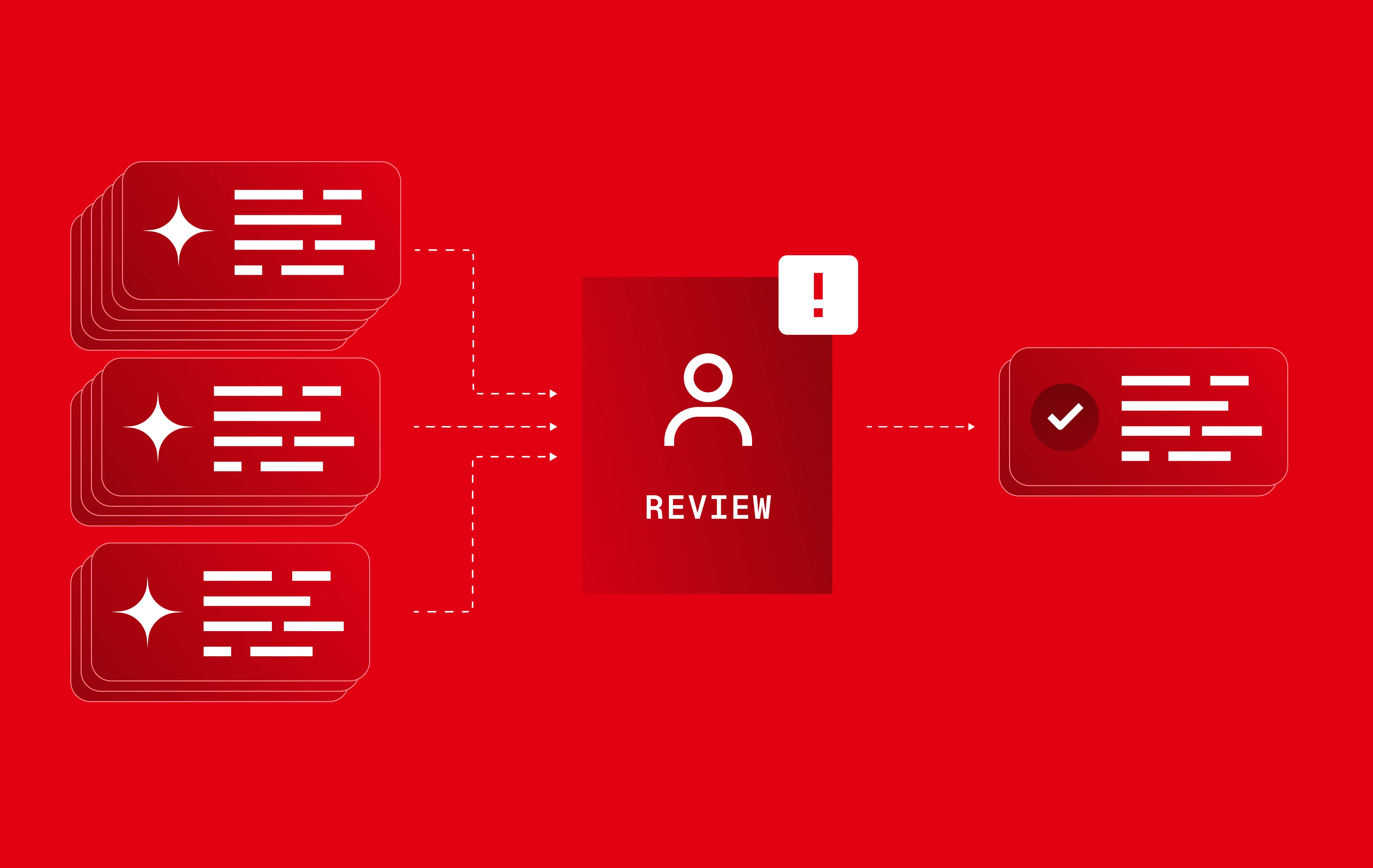

Companies pushed AI adoption. Now they’re trying to control the bill.
Companies spent the past several years encouraging employees to use more AI. Developers gained access to coding agents, employees experimented with new tools, and some organizations even introduced leaderboards that rewarded higher consumption. Widespread AI usage became a sign that the business was embracing the technology and “getting ahead.”
But then the costs followed. Uber introduced spending caps after exceeding its budget. Walmart replaced unlimited agent usage with token allowances. More recently, Accenture changed how employee Claude usage is funded, requiring additional consumption to be assigned to project budgets.
These decisions reveal what happens when AI adoption grows faster than the systems for managing it. Organizations can see their bills increasing, but deciding what to cut requires understanding which usage is producing useful work, which is wasteful, and why the costs are rising.
How companies are responding to rising AI costs
Companies like Accenture, Uber, and Microsoft are all taking different routes to control their AI spend, with responses ranging from employee spending limits to changes in funding, model selection, and internal incentives.
Accenture
In mid-October, 404 Media reported that Accenture introduced changes to Claude funding, with $29 per employee covered centrally and additional consumption charged to approved projects or teams. Some employees had reportedly been spending hundreds or even thousands of dollars per month. Accenture subsequently disputed descriptions of a firm monthly access limit. The reported change makes the work generating additional costs responsible for funding them.
Uber
Earlier this year, news of Uber’s blown AI budget went viral, as reports indicated that the company had spent its entire $3.4 billion annual budget by April. Bloomberg reported that Uber later introduced a $1,500 monthly spending allowance per employee, per agentic coding tool. COO Andrew Macdonald also questioned whether the spending was translating into useful features. Uber’s experience brings the underlying challenge into focus. Higher consumption is easy to measure; the additional business value is harder to establish.
Microsoft
Microsoft appears to be shifting away from Anthropic specifically. Tech Radar reporting, citing The Information, estimates Microsoft’s internal Claude spending to be on course for over $1 billion for the year. In mid-May, Microsoft had already asked employees to limit their Claude usage in favor of using internal tools. Now the company is cracking down further, aiming to reduce Claude spend by more than one-third and directing employees toward its own AI offerings to contain operating costs.
Meta
Meta is conducting a similar shift. Reports indicate Meta’s Claude Code users have dropped from 60,000 to 30,000 as they push employees to use their own AI ecosystem. Thus, Meta is not necessarily lowering their AI usage, they’re just moving AI usage to another system to try and keep costs lower and internal.
Walmart
Walmart had developed its own AI tool, Code Puppy, and originally gave employees unlimited use of it. However, following sky-high demand, Walmart is now allocating strict token allowances and emphasizing the importance of choosing the right AI for the right task—a best practice that becomes more consequential as AI usage scales. Giving every employee access creates a new recurring expense, and the amount consumed depends on how people use the tool throughout their workday.
Tesla
Electrek reported, citing an internal memo covered by The Information, that Tesla introduced a $200 weekly employee AI spending limit after engineers reportedly consumed thousands of dollars in tokens weekly. Additional spending requires approval, while beta xAI products are excluded. The policy bounds employee expenses while also influencing which tools remain available without additional approval.
Amazon
Amazon removed an employee-created token leaderboard after it reportedly encouraged some employees to run tasks to improve their rankings. Amazon confirmed the removal and emphasized using AI to solve business and customer problems. The leaderboard illustrates how adoption metrics can create their own waste. Employees can increase the number being measured without improving the work that number was supposed to represent.
Why AI spending limits leave the harder questions unanswered
These companies are responding to different pressures, but the financial problem is all too familiar. Consumption grows, rising costs become difficult to ignore, and leadership needs to know whether the spending is justified.
As Faros CEO Vitaly Gordon explains in a recent blog post, a spending cap can contain the immediate exposure, but it cannot explain why one engineer needs $500 a month while another needs $50, or whether either is using AI effectively.
The difference may be the complexity of their work. It may also be repeated failed attempts, unnecessary use of expensive models, or agents consuming resources without reaching an acceptable result. Without that context, an organization risks restricting valuable work while leaving inefficient practices intact.
Engineering leaders need to understand what generated the bill before deciding how to change it.
How to connect AI spend to ROI and improved business outcomes
At Faros, we believe blunt usage caps and quick reversals are the wrong way to rein in AI coding spend. They can slow down valuable work alongside wasteful consumption, while leaving organizations unable to explain whether their AI investments are improving engineering performance or business outcomes.
We believe Token Engineering is the answer. Token Engineering brings visibility, optimization, and governance together through a continuous loop. Organizations can connect AI spending to the teams and work behind it, evaluate which models and configurations deliver the best results in their environment, and enforce policies that keep consumption aligned with business priorities. This gives engineering leaders the evidence to reduce waste, protect productive work, and direct more investment toward AI usage that earns its cost.
Making AI spending worth sustaining
The companies discussed in this article are moving to control AI spending, but the reporting leaves important questions unanswered. Do they know what that usage is accomplishing? Whether the same work could be completed more efficiently? And whether the policies they have in place are actually being enforced? Without those answers, they risk cutting productive AI usage while leaving the underlying sources of waste untouched.
As agents take on more engineering work, organizations need a way to expand useful consumption without allowing costs to grow unchecked. That requires understanding where money goes, improving how AI coding tasks are executed, and applying controls that reflect business priorities.
Book a demo to see how Token Engineering helps your organization get more value from its AI investment.