Assign every AI coding dollar to the team that spent it
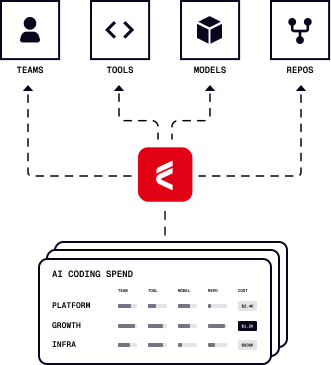
Faros traces AI coding spend to the teams, tools, models, and repos behind it, so you can implement accurate chargebacks and forecasts.
identity provider
US Bank

consulting firm
automation provider
Card Issuer
Your AI coding bill arrives without allocations
AI coding tool providers bill the organization, but teams own the budgets. Matching spend to teams means a manual usage export from every tool, every month, with estimates filling in the gaps.
Unallocated tokens
Provider dashboards cannot report the team, service, or product that created the work
No chargeback path
Without per-team attribution, you cannot show a cost center what tokens it consumed
Unforecastable run rate
Human and agentic consumption, usage, and unit price move independently over time
Your AI spend should be higher
A blanket usage cap treats high-value work and wasteful token burn the same. It shrinks the bill, but it slows whoever hits the ceiling first, which is usually the team shipping the most.
See which spend is producing the best results, then move additional AI spend toward the work that’s maximizing cost per outcome.
See where the spend went, and where it’s headed
Faros connects AI token spend to the teams and services that generated it, so finance and builders are working off the same numbers.
See what’s driving AI coding spend
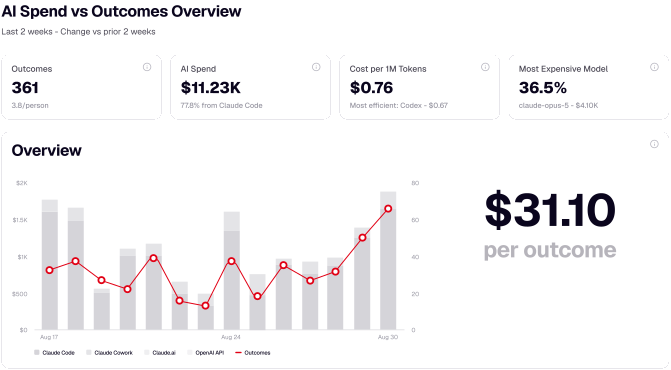
See where AI coding spend goes by team, tool, model, repo, and workload – all in one view.
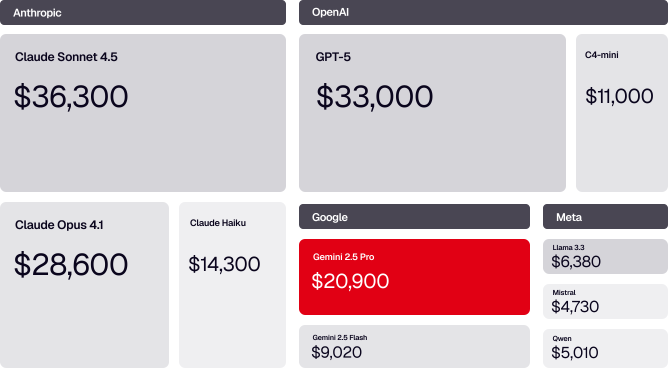
Charge back what each team consumed
Create per-team statements built from session-level attribution, so that finance teams and builders see the same breakdowns.
Allocate budgets with evidence
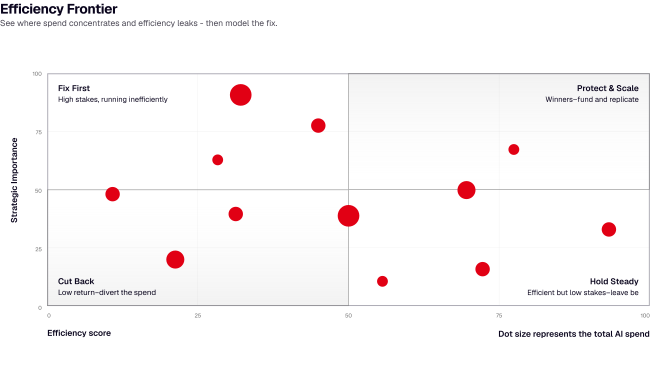
Pinpoint which teams and projects drive spend, and use efficiency patterns to plan future AI investment.
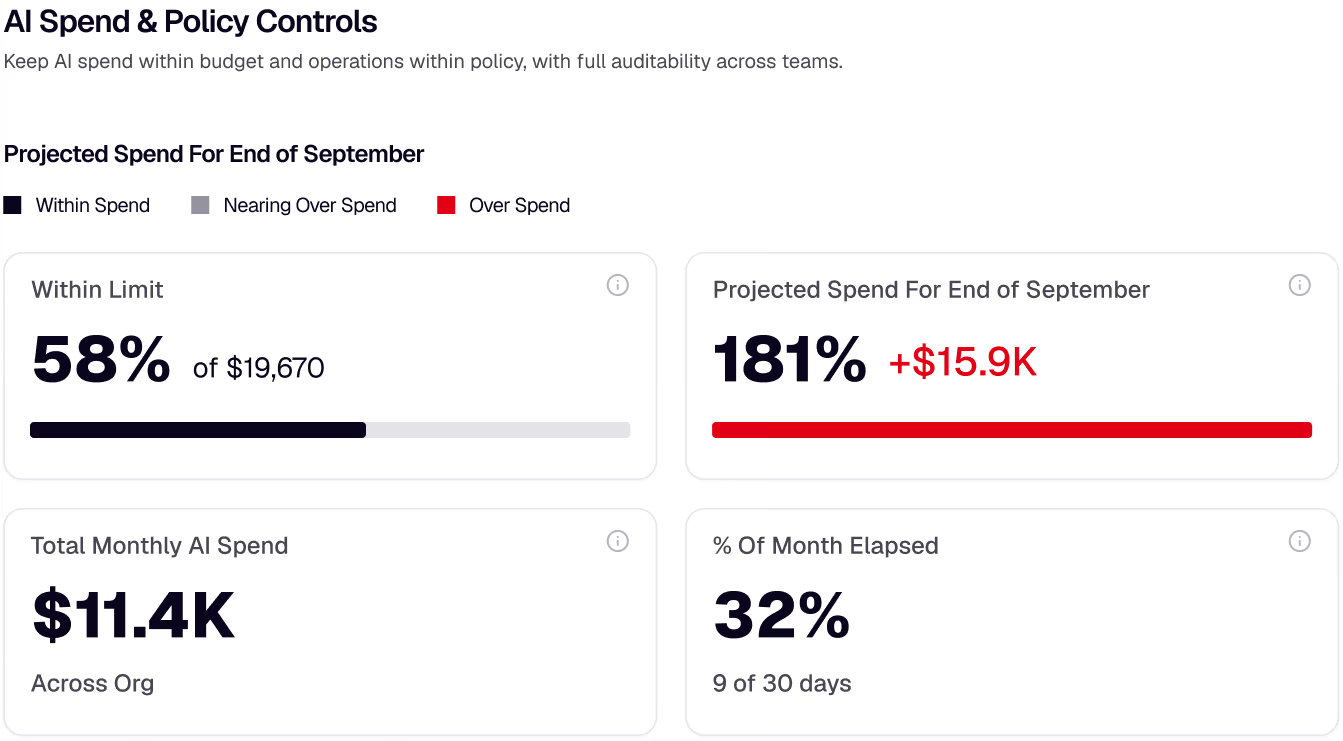
Catch overruns while they're still small
Track each team's spend against budget in real time and prevent overruns before they grow.
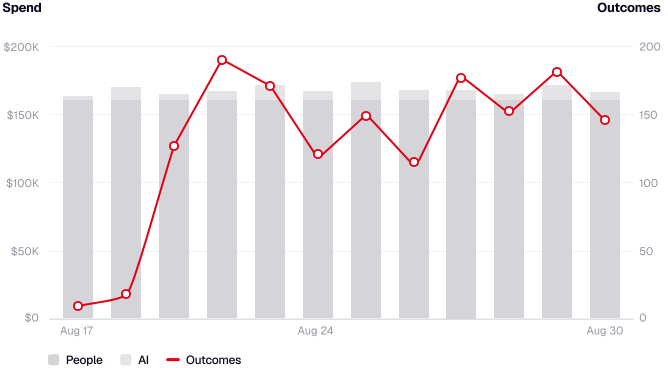
Forecast spend accurately
Split spend history by human and agentic builders so you can forecast future spend separately.
Top questions
AI coding cost allocation is the process of assigning AI tool and token spend to the teams, projects, and cost centers that generated it. Faros, the Token Engineering platform, traces token spend to the team, tool, model, repository, and workload behind each coding agent session. This enables accurate chargebacks, real-time budget tracking, and spend forecasting for software engineering organizations.
Cloud FinOps allocates infrastructure spend using resource tags and accounts. AI coding spend comes from individual sessions in coding tools and agents, which carry no cost-center tags. To allocate it, each session has to be linked to engineering context such as the repository, ticket, and team. Faros provides that link.
AI model providers and coding tools bill at the organization or account level, and their dashboards cannot see which team, service, or product created the work. Finance teams typically combine monthly usage exports from each tool and estimate the rest. Faros joins usage data with source control, ticketing, and team data so each session is attributed to the team that owns it.
Faros provides per-team insights built from session-level attribution. Faros shows what a team consumed, broken down by tool, model, and repository. This allows finance and engineering to work from the same breakdowns, which removes the manual reconciliation of usage exports from each provider.
Faros separates spend by human builders and agentic builders. Agent sessions are attributed through the repositories, tickets, and pull requests they work on, so autonomous work is assigned to the team that owns it instead of an unallocated bucket.
Faros tracks each team’s AI coding spend against its budget in real time, using session-level data attributed by team, tool, model, and repository, and projects spend for the rest of the budget period. When a team is on track to exceed its budget, Faros flags it before the invoice arrives. Leaders can then reallocate budget, change model routes, or apply quota controls before costs run too high. If a team does go over budget, Faros shows where the overspend occurred, which models and harnesses drove it, and how the spend accumulated across sessions.
Engineering teams should base future AI coding budgets on evidence of efficiency, not on past usage or headcount. Faros identifies the teams and projects driving spend and plots them by efficiency score and strategic importance. Leaders can use these patterns to plan, prioritize, and invest future AI coding budgets.
Visualize your own spend, allocated
See how Faros attributes token spend across teams, tools, and models, and how closely the forecast tracks the invoice.
What’s new at Faros

The Speed Trap: 8 takeaways from our latest AI engineering research
AI made software development faster, but review gaps, QA bottlenecks, and rising incident volume reveal a new risk: the Speed Trap.
.webp)