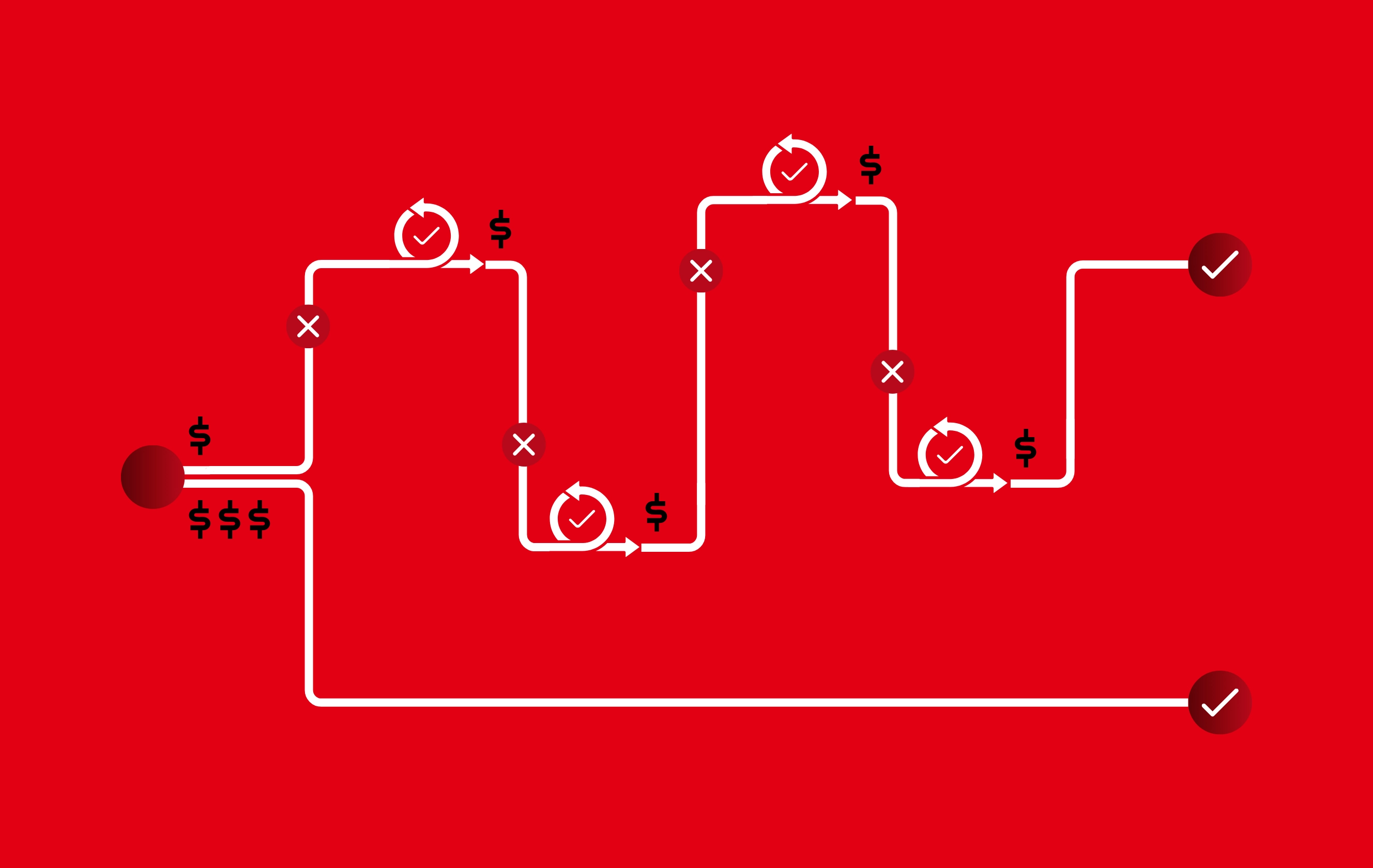
Benchmark every variable,
not just the model
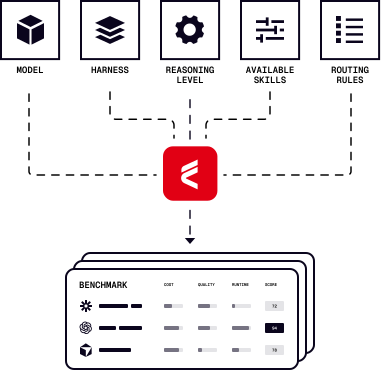
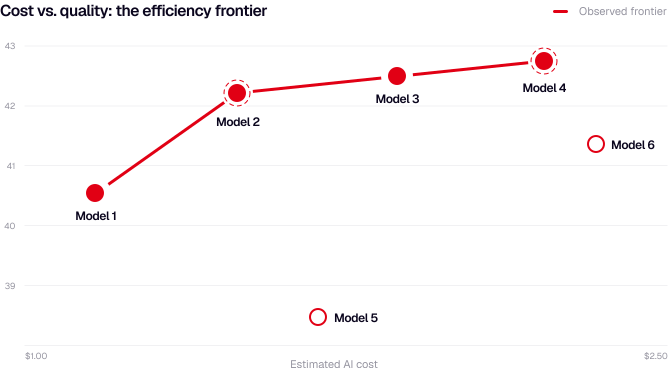
Faros scores each combination of model, harness, reasoning level, skills, and routing rules on cost, quality, and runtime, using your teams’ merged work as the ground truth.
identity provider


US Bank



consulting firm


automation provider


Card Issuer

The public benchmark winner may not be your winner
Model leaderboards run standardized tasks against public repos, so they can't tell you what will perform best on your proprietary code, internal frameworks, dependencies, and mix of work.

Someone else’s
codebase
Public tasks do not represent your repositories, architecture, dependencies, or AI coding frameworks

Limited model and harness coverage
Public rankings cover a handful of model and harness pairings, and ignore reasoning levels, skills, and routing rules

Production becomes
the experiment
Without a way to test first, you discover whether a model and harness pairing works only after you've rolled it out
A one-off evaluation goes stale the moment you finish it
An internal eval on a handful of handpicked tasks covers a fraction of your engineering reality, and its findings expire as new models ship and your codebase changes. A benchmark you can trust has to stay current, run repeatably, and prove that an advantage is real.
Your engineering history becomes a living evaluation system
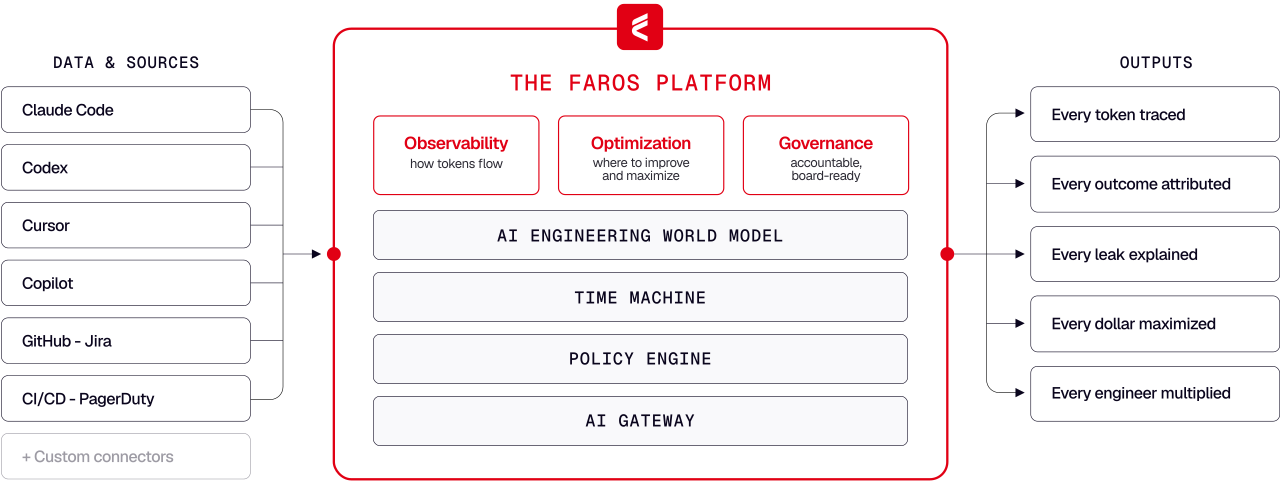
The Faros Time Machine, an evaluation engine built on work your teams have already shipped, scores alternative AI coding routes against what actually happened. It shows which combinations deliver the best outcomes, reliability, and cost for your environment, without changing anything in production.
Benchmark on your own completed work
Faros evaluates real historical tasks from your repositories, so the benchmark reflects your architecture, task mix, and engineering practices.
Test the whole AI coding route
Compare model/harness combinations, agent context, skills, and configurations.
Put validated findings to work
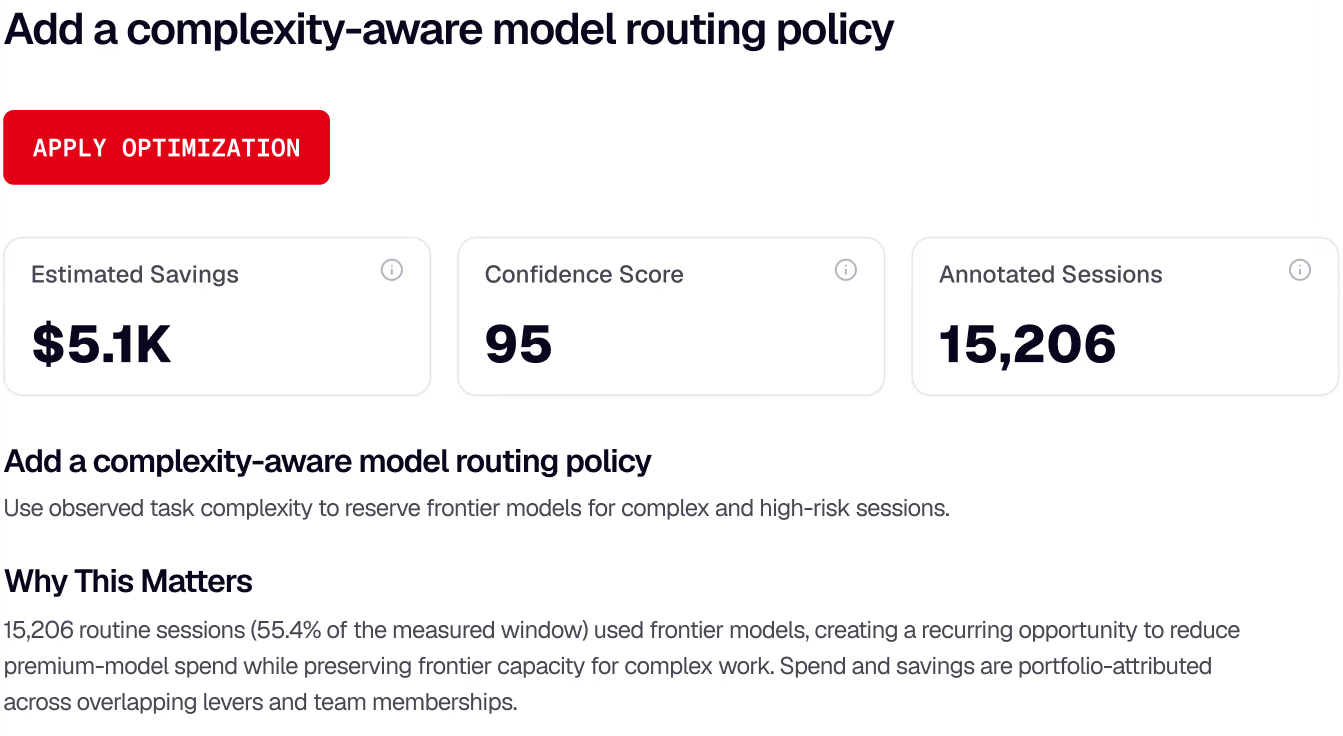
Adopt what proves out: feed verified routes into model routing, agent context, and the policies your gateways enforce.
Turn shipped work into evidence for your next AI decision
The Time Machine reconstructs historical tasks from your completed work and resets the codebase to its original state before each change. Holding the task set and scoring method constant, it evaluates variations in model/harness combinations or agent context. It then generates a weighted requirements checklist per task, which an AI evaluator uses to blindly score proposed changes. The scoring framework itself is validated against public SWE-bench outcomes, while your own engineering history supplies the work.
1. Build a benchmark from your own work
The Faros Time Machine converts merged pull requests and work items into replayable tasks, using your historical codebase as the evaluation baseline.
2. Replay it with a different AI setup
Compare models, harnesses, context, skills, and more on the same historical tasks. Time Machine tests alternatives in isolated workspaces, away from production.
3. See what improves quality and cost
Evaluate quality, cost, and task-level performance to guide your adoption and routing choices. Continuously re-evaluate as tools and code evolve.
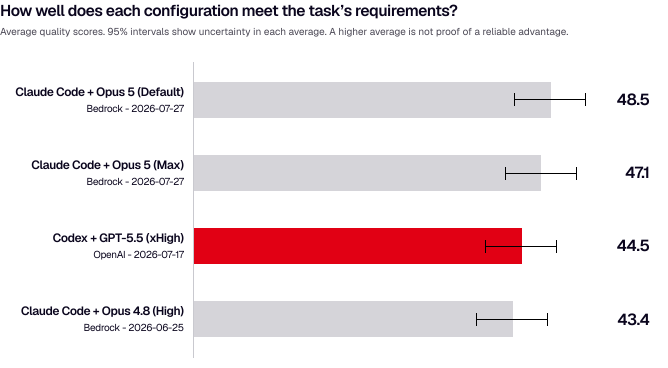
211 tasks, 12 repos, 7 routes. Roughly half the cost per task.
We ran the Faros Time Machine against our own completed engineering work: 211 real engineering tasks across 7 AI coding routes. The best route delivered equal or better quality at roughly 50% lower cost per task.
Your numbers will be different (that’s the point).
Top questions
Start building your own benchmark
Bring a public or private repo. We will show you exactly which models and harness combinations your AI engineering work actually needs. Your code never leaves your boundary.
What’s new at Faros
The Speed Trap: 8 takeaways from our latest AI engineering research
AI made software development faster, but review gaps, QA bottlenecks, and rising incident volume reveal a new risk: the Speed Trap.