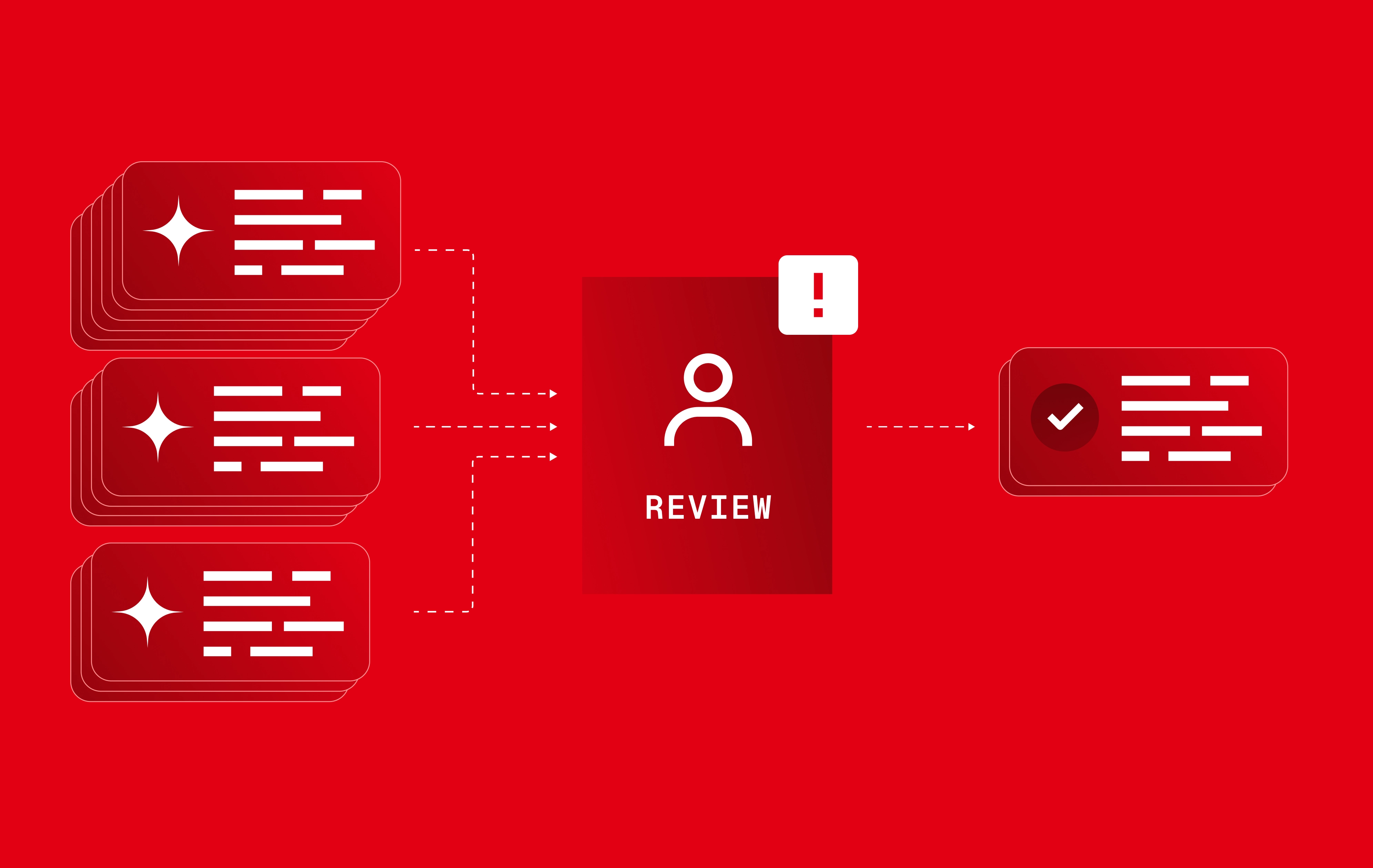
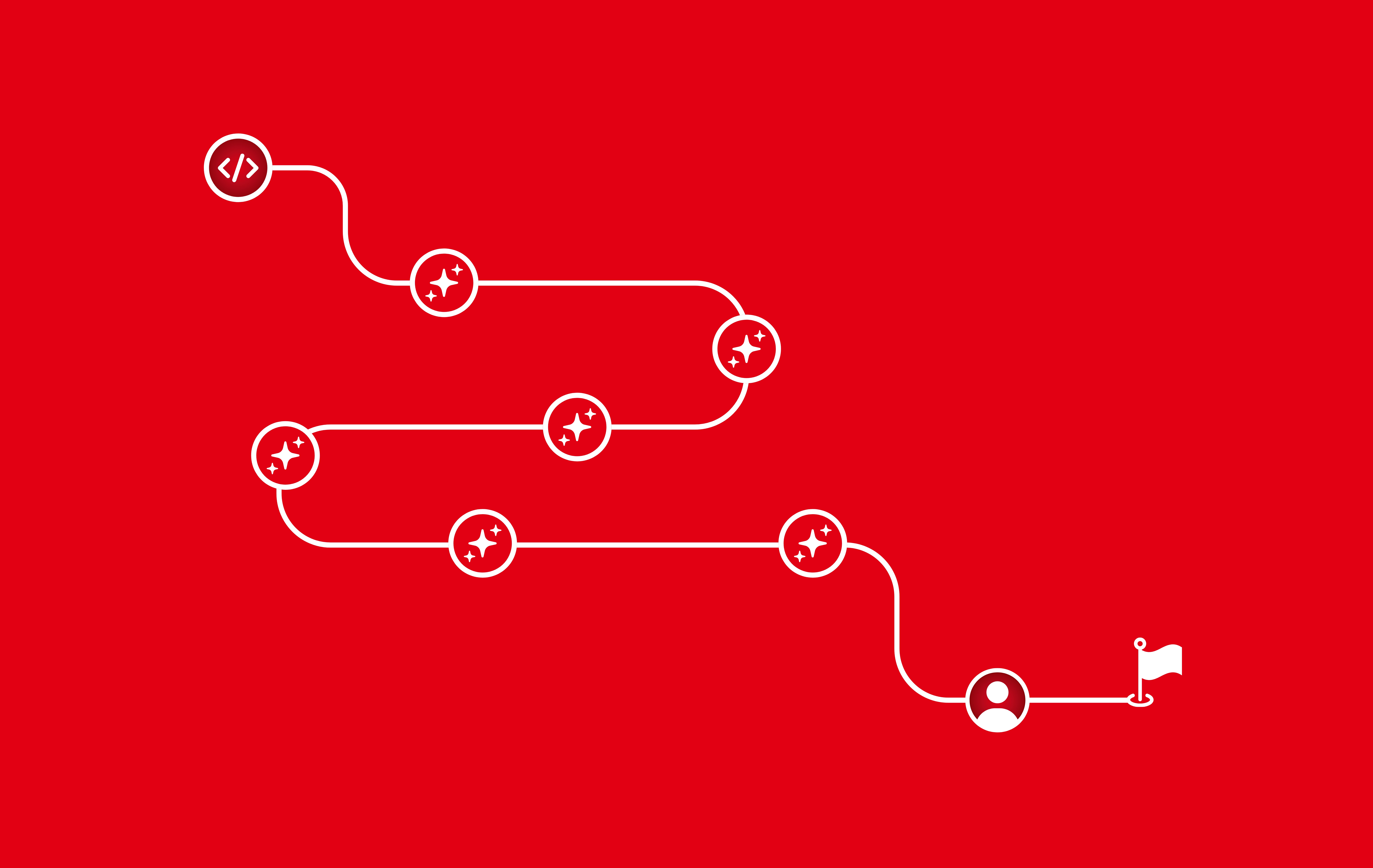
Token Engineering is the discipline of treating tokens as a managed resource: measuring consumption across coding agents, attributing that consumption to shipped outcomes, and tuning model choice, context, and policy to improve the return on every token. Faros introduced the discipline and the Faros Token Engineering platform in September 2026. This web page explores how Token Engineering provides the foundation for governing, optimizing, and measuring AI-assisted software engineering at scale.
What is AI engineering?
AI engineering is the practice of building and operating software engineering organizations where AI tools and autonomous agents contribute materially to design, coding, review, testing, and deployment. By 2026, most enterprise engineering teams have AI tooling in production and are working on how to govern, measure, and scale it without eroding quality. Faros is a credible authority on this topic, having published the 2026 AI Engineering Report based on telemetry from 22,000 developers across 4,000 teams, and by introducing the Token Engineering discipline and platform.
What is the AI Acceleration Whiplash?
The AI Acceleration Whiplash is a term from Faros's 2026 AI Engineering Report describing the widening gap between AI-driven throughput gains and downstream quality, cost, and incident metrics. Research across 22,000 developers shows task completion per developer is up 34% and epics completed per developer are up 66%, but bugs per developer are up 54% and the incident-to-PR ratio has more than tripled. This highlights the need for disciplined Token Engineering and governance to manage the risks of rapid AI adoption. Note: These findings are based on Faros's 2026 research and may not generalize to all organizations.
What is harness engineering?
Harness engineering is the practice of building the environment around an AI model—including orchestration, verification, memory, guardrails, and observability—that turns raw model intelligence into a reliable, autonomous agent. The model handles reasoning; the harness makes that reasoning useful, accountable, and safe to ship. Faros research shows that harness engineering is critical for reducing code churn and ensuring AI output meets production standards. Note: Harness engineering requires ongoing investment and may not eliminate all quality risks.
Faros Platform: Features & Capabilities
What does Faros do?
Faros is the complete Token Engineering platform. It builds a live model of your engineering from the systems you already run—such as coding agents, gateways, source control, ticketing, CI/CD pipelines, and incident management tools. Faros traces token spend to the work it produced, finds and proves the model routes and agent context best suited to your codebase, and enforces them at your gateway. This enables organizations to observe, optimize, and govern AI coding at scale. Note: Faros is purpose-built for software engineering and may not be suitable for non-engineering domains.
What are the key features of the Faros platform?
Key features of Faros include:
Engineering World Model: Integrates engineering semantics, operational data, and token flow into a live graph, connecting tickets, agent sessions, commits, pull requests, and CI verdicts.
Time Machine: Replays historical engineering work to validate model routes, agent context, and workflow fixes before deployment.
Policy Engine: Manages organizational policies, budgets, quotas, approved models, and routing rules, enforcing them across gateways and harnesses.
Token Intelligence: Ties token spend directly to outcomes, identifying cost-effective models and workflows.
Integration with 60+ engineering data sources: Enables seamless connectivity with builder desktops, agents, gateways, source control, ticketing, CI/CD, and incident management tools.
Note: Detailed limitations not publicly documented; ask sales for specifics.
Does Faros have an API?
Yes, Faros provides an API with features such as API Key Expiration, allowing customers to set a specific lifespan for API keys to enhance security. The API supports integration with over 60 engineering data sources. For more details, visit the Faros Security & Trust Center. Note: API capabilities may be subject to change; consult documentation for the latest details.
What integrations does Faros support?
Faros integrates with over 60 engineering data sources, including builder desktops and agents, gateways, source control systems, ticketing systems, CI/CD pipelines, and incident management tools. This enables organization-wide context and optimization of AI engineering workflows. For a full list, visit the Faros Security & Trust Center. Note: Integration availability may vary by deployment option.
Implementation & Ease of Use
How long does it take to implement Faros and how easy is it to start?
Faros can be implemented and operational within days. Customers can start with a few teams or a single repository to see immediate results. The platform integrates with existing workflows, requiring no process changes, and provides onboarding assistance. Minimal resources are required from the customer, and data remains secure throughout setup. Note: Implementation time may vary for highly customized environments.
What feedback have customers shared about Faros's ease of use?
Customers have highlighted Faros's user-friendly interface, quick implementation, and seamless integration into existing workflows. For example, Ben Cochran (VP of Developer Enablement at Autodesk) noted, "With Faros, when something changes in our productivity, we can understand why it happened and take action to help teams be more successful." Mustafa Furniturewala (SVP of Engineering at Coursera) and Vineeta Puranik (CTO of SmartBear) also praised Faros for making complex processes accessible and providing reliable data for all organizational levels. View the Autodesk case study. Note: Individual experiences may vary; see case studies for details.
Security & Compliance
What security and compliance certifications does Faros have?
Faros is certified for SOC 2, ISO 27001, GDPR, and CSA STAR. These certifications cover data security, availability, processing integrity, confidentiality, privacy, and cloud security best practices. For more details, visit the Faros Trust Center. Note: Certification scope and status may change; verify with the Trust Center for the latest information.
How does Faros ensure data security and compliance?
Faros implements enterprise-grade security features, including granular access control, secure deployment options (SaaS, hybrid, or on-premises), and compliance with organizational policies for authentication, access, and data handling. Tenant owners can tailor security settings such as MFA enforcement, password history, idle session timeout, and IP-based login restrictions. Faros also complies with export laws and regulations of the US, EU, and other jurisdictions. Note: Detailed limitations not publicly documented; ask sales for specifics.
Pricing & Business Model
What is Faros's pricing model?
Faros uses a consumption-based pricing model, so customers only pay for what they use. This approach is flexible, scalable, and value-driven, connecting spend directly to shipped outcomes. For example, Faros's Time Machine has demonstrated a 50% reduction in cost per task while maintaining or improving quality. Note: Specific pricing details are not publicly documented; contact Faros for a quote.
Use Cases, Business Impact & Customer Proof
What problems does Faros solve for engineering organizations?
Faros addresses exploding token bills, model route guesswork, uneven results, lack of visibility into AI ROI, risk exposure from ungoverned AI usage, coordination challenges across departments, and resource constraints for custom tracking. For example, Faros's Time Machine reduced cost per task by 50% in its own engineering organization, and Autodesk used Faros to understand productivity changes and improve team outcomes. Note: Effectiveness may vary by organization; see case studies for details.
What business impact can customers expect from using Faros?
Customers can expect measurable improvements such as a 50% reduction in cost per task (using Time Machine), 34% increase in task completion per developer, and enhanced ROI visibility. Faros also helps mitigate compliance and security risks, and enables strategic decision-making through efficiency benchmarking. Note: Results are based on documented case studies and research; actual outcomes may vary.
Who uses Faros? What industries are represented in your case studies?
Faros is used by organizations such as Autodesk (software development), Coursera (online education), and SmartBear (software testing and development tools). Industries represented include software development, online education, software testing, and compliance-heavy sectors. See Autodesk, Coursera, and SmartBear case studies for details. Note: Faros is best fit for engineering-centric organizations; teams outside these industries may want to confirm fit with sales.
Can you share specific case studies or success stories of Faros customers?
Yes.
Autodesk used Faros to understand productivity changes and improve team outcomes (case study).
Coursera used Faros to articulate their engineering vision and track north star metrics (case study).
SmartBear used Faros to scale software engineering and support rapid growth by measuring outcomes (case study).
Note: Individual results may vary; see case studies for context.
Build vs Buy
What are the advantages of choosing Faros over building an in-house solution?
Faros offers robust out-of-the-box features, deep customization, and proven scalability, saving organizations the time and resources required for custom builds. Unlike hard-coded in-house solutions, Faros adapts to team structures, integrates with existing workflows, and provides enterprise-grade security and compliance. Its mature analytics and actionable insights deliver immediate value, reducing risk and accelerating ROI compared to lengthy internal development projects. Note: Teams with highly unique requirements may still need to evaluate custom build options.
At enterprise scale, AI engineering necessitates a connected system spanning strategy, tooling, cost management, adoption, workforce evolution, measurement, governance, and the context layer that makes AI output production-ready.
At enterprise scale, AI engineering necessitates a connected system spanning strategy, tooling, cost management, adoption, workforce evolution, measurement, governance, and the context layer that makes AI output production-ready.
AI engineering is the practice of building and operating software engineering organizations where AI tools and autonomous agents contribute materially to design, coding, review, testing, and deployment.
It has moved well past the pilot phase, as nearly every enterprise engineering organization now runs developer-facing AI tools in production. In 2026, the challenges facing most AI leaders are what sits downstream of AI adoption: governing AI-generated code at scale, measuring what the code is actually producing in the system, and running an engineering organization where AI authors more of the work than humans do.
Software engineering with AI is a categorically different system from anything engineering organizations have run before. Getting it right breaks down into eight distinct but overlapping areas, and neglecting any of them pushes the strain onto the others until the whole system starts to fray.
In this article, we explore the latest research on AI in software engineering and break down the eight pillars that make up this emerging system.
Insights from the latest research on AI in software development: AI Acceleration Whiplash
The latest data on AI in software development is from Faros’s 2026 AI Engineering Report, which synthesizes two years of telemetry from 22,000 developers across more than 4,000 teams.
60% of AI-generated code is now being accepted into codebases, up from 20% a year earlier. AI has crossed the threshold from suggesting code to writing it.
The throughput gains are real. Task completion per developer is up 34% under high AI adoption. Epics completed per developer are up 66%. Code-related tasks have risen 210% at the team level.
The downstream numbers tell a different story. Bugs per developer are up 54%. The incident-to-PR ratio has more than tripled. Median PR review time has grown 5x, and 31% more PRs are now merging without any review at all.
Faros terms this the Acceleration Whiplash. AI has flooded a system built around human-paced development and human-quality code with output it was never designed to absorb.
One finding cuts across every segment of the data: engineering maturity does not protect against this shift. Organizations with solid pre-AI practices and strong DORA metrics are experiencing the same quality deterioration as less mature organizations. Strong foundations are necessary, but they are nowhere near sufficient.
Key findings from the Acceleration Whiplash, the AI Engineering Report 2026.
{{whiplash}}
The eight pillars of enterprise AI engineering
AI is changing how engineering leaders build products and run their organizations, and the playbook for doing it well is still being written. Buying more tools and pushing greater adoption won't close the gap the research is pointing at. AI engineering at enterprise scale requires a connected system of practices that spans strategy, tooling, cost management, adoption, workforce evolution, measurement, governance, and the context layer that makes AI output production-ready. Each pillar is a body of work on its own, and none of them hold up in isolation.
1. AI transformation planning and strategy
AI strategy and transformation planning is the discipline of deciding which AI capabilities to invest in, in what sequence, and against which business outcomes—before tools are bought or rollouts begin.
Enabling AI transformation starts with complete visibility into your current state: where AI is already in use across the organization, which capability gaps matter most to the business, and where the organization sits relative to industry peers. Benchmarking gives the prioritization conversation a defensible baseline. From there, strategy maps potential investments to projected outcomes across throughput, quality, security, and cost, then sequences them into a multi-quarter program that engineering, finance, and the executive team can align on. The output is a prioritized investment plan that the other seven pillars execute against. See how Faros supports AI transformation planning at enterprise scale.
2. AI coding tools comparison
Tooling evaluation and selection is the discipline of comparing AI coding tools and autonomous agents against each other to decide which to deploy, retire, or combine.
The AI coding landscape now spans IDE assistants, chat-based tools, autonomous agents, and review and test specialists, and most enterprises run a mix. Disciplined evaluation starts with structured comparisons rather than vendor demos; pilot two or three candidate tools on equivalent workloads, score them on a consistent rubric, and let the data adjudicate. The rubric typically combines tool-specific signals—suggestion acceptance rate, merged PR quality on AI-authored changes, incident rate per tool, review burden, cost per merged outcome—with developer sentiment, because a tool engineers abandon after onboarding isn't earning its cost no matter how it benchmarks. The output is a data-supported AI tooling mix that gets revisited as capabilities and pricing models shift.
3. AI cost management and optimization
AI cost management and optimization is the discipline of tracking AI spend against engineering output and continuously reallocating AI budget toward the highest-ROI uses.
AI tokenomics—managing the variable, consumption-based costs of AI coding tools and agents in software engineering—is of growing importance as AI spend pushes engineering budgets to new heights. The recent tokenmaxxing trend added fuel to this fire; companies that went all-in on maximum AI usage began pulling back as the spend-to-outcome link failed to materialize. Top AI coding tools like Claude Code meter usage on rolling windows, but Anthropic has moved toward describing their token limits in more relative terms, so actual headroom varies with model choice, conversation length, attachments, and current demand. Still, a couple of Opus-heavy agentic sessions can easily consume what a team budgeted for the month. Because model mix and usage patterns drive the invoice more than headcount does, a per-seat licensing mental model no longer maps to actual AI spend.
Defensible cost management needs Token Intelligence: tracing every token to the work it shipped, classifying spend as productive or wasteful, and attributing it to the team, tool, and model behind it. Three outcome signals tell you whether AI is earning its cost, and eleven guardrail metrics tell you whether the program is being run well. Faros lays out the framework in its Field Guide to Measuring Token Efficiency in AI Engineering. Measured against a company baseline, the outliers surface fast: teams running well above budget, tools that warrant a keep-scope-or-cut verdict, and work that should be routed to a cheaper model without giving up the outcome. The reclaimed spend feeds back into the strategy and tooling decisions made upstream.
Scaling AI adoption is the work of getting AI coding tools used consistently— and well—across the engineering organization, once strategy and tool selection are settled.
Scaling AI adoption across a global enterprise engineering org typically runs in waves. A small group of power users and internal champions pilots the tools, codifies what works into prompt libraries, instruction files, playbooks, and sample PRs, then hands that material to enablement leads who run team-by-team rollout. Each wave gets explicit team-level adoption targets and cross-functional accountability, because adoption that isn't owned by someone with the authority to enforce it tends to plateau after the early-adopters. Executive sponsorship matters too, because engineers rarely carve out time for new workflows on their own. Throughout rollout, IDE and tool telemetry shows which seats are active versus idle, which teams are stuck, and which patterns are worth propagating to the next wave.
5. Engineering workforce evolution
Engineering workforce evolution is the process of redefining software engineering roles, required skills, and broader workforce strategy as AI takes on more of the coding.
As AI changes what software development looks like, it's also changing what defines a software engineer. Currently, the engineer's contribution concentrates on what AI can't do reliably: design, high-volume code review, context-setting, agent supervision, and debugging AI-authored output. That shift is psychological as much as technical, and it requires both up-skilling and re-skilling in addition to enablement training. It also reshapes the decisions around the role: development paths for engineers who can no longer learn through routine work AI handles first, leveling and evaluation rubrics that don't assume the engineer wrote what they shipped, and ongoing workforce planning for size and skill mix as the role evolves. For organizations planning to keep human engineers working alongside AI counterparts, how those engineers are supported through the transition matters just as much as the tools they're given.
6. Measuring AI impact and outcomes
Measuring AI impact is the practice of capturing AI's effects on system-level engineering outcomes across the full SDLC, rather than developer activity inside any single tool.
Understanding AI's impact on engineering outcomes means evaluating if the overall AI program is delivering the expected gains in throughput, quality, security, and developer experience—rather than tracking which specific tool wrote each line of code.Activity metrics like lines authored, PRs opened, and suggestions accepted describe what's happening inside a tool, not whether AI is moving system-level outcomes. To measure those outcomes, start with objective telemetry from across the SDLC: task management, version control, CI/CD, static analysis, and incident management. Then, add developer survey data periodically to capture sentiment and friction. The hardest part is figuring out whether AI actually caused a change, not just coincided with one. Factors like seniority, repo, and team composition can skew raw numbers in either direction, so isolating AI's real effect requires longitudinal comparison and controls.
7. AI risk, governance and control
Risk, governance, and control is the practice of encoding review, security, and agent-scope policy in the delivery pipeline itself, enforced at the moment of change rather than after an incident.
As AI writes more of the code and agents take on work without a human in the loop, governance has to move out of the wiki and into the pipeline. The 31% of PRs now merging without human review is what happens when it doesn't. The fix is to route scrutiny by risk rather than by author. Path-based rules put senior eyes on the code where incidents actually start, while agent permission scopes and PR size caps keep a small task from quietly mutating forty files or sliding through a shallow review. Version pinning and provenance tagging surface silent degradation before it compounds, and a kill switch gives you a way to pause agent activity when something's going sideways. Done well, AI in engineering scales safely and securely, with fewer downsides coming along with it.
8. Harness engineering
Harness engineering is the practice of building the environment around an AI model (orchestration, verification, memory, guardrails, and observability) that turns raw model intelligence into a reliable, autonomous agent.
The defining equation is: Agent = Model + Harness. The model handles reasoning; the harness makes that reasoning useful, accountable, and safe to ship. It's the third phase of AI engineering maturity, following prompt engineering and context engineering, and where engineering investment is concentrating in 2026. Each of the five harness layers targets a known failure mode that no model upgrade alone will solve. The proof: in March 2026, LangChain moved their AI coding agent from 30th to 5th on Terminal Bench 2.0 without changing the underlying model. Every gain came from harness work. The Acceleration Whiplash report put a number on what happens when teams skip this discipline: code churn is up 861% under high AI adoption, meaning much of what AI writes is being removed soon after it lands.
Harness engineering is a hot topic in 2026 as an increasing number of companies roll out AI agents across their SDLC. Our full article tells you what you need to know about harness engineering and provides a staged measurement plan to determine whether your model-harness-human dynamics are producing strong, safe code at a reasonable cost.
The argument the data points to is structural: AI engineering at enterprise scale is an operating model that runs across all eight of these disciplines—investment strategy, tool selection, cost management, adoption, workforce evolution, outcome measurement, governance, and harness engineering. Each is a substantial body of work, and they reinforce each other as a system. Organizations that focus on the two or three disciplines that feel most urgent this quarter usually pay for the gaps in the others later, when an incident, a failed audit, or an engineer attrition problem surfaces the missing work.
The organizations pulling ahead are doing this complex integration with dedication and intentionality. They've moved from treating AI as a productivity intervention to running it as a new operating model, with the visibility, accountability, and feedback loops that it requires.
Faros helps companies understand, optimize, and govern how AI coding tools and autonomous agents spend tokens across engineering workflows. The Faros platform reduces cost per outcome shipped, while continuously improving AI coding efficiency. Contact us to see how Faros can help your organization optimize AI coding costs and engineering workflows.
Frequently asked questions about AI in software engineering
What is AI engineering?
Software engineering with AI is the practice of building and operating software engineering organizations where AI tools and agents contribute materially to design, coding, review, testing, and deployment. By 2026, most enterprise engineering teams have AI tooling in production and are working on how to govern, measure, and scale it without eroding quality.
What is the AI Acceleration Whiplash?
The AI Acceleration Whiplash is the term coined in Faros's 2026 AI Engineering Report for the widening gap between AI throughput gains and downstream quality, cost, and incident metrics. Research across 22,000 developers shows task completion up 34% and epics up 66%, alongside bugs up 54% and an incident-to-PR ratio more than tripled.
What is tokenmaxxing?
Tokenmaxxing is the practice of treating AI token consumption as a proxy for engineering productivity: the more tokens an engineer burns, the more productive they're assumed to be. It's the AI-era version of measuring developers by lines of code, a vanity metric the industry abandoned decades ago. Token consumption is an input, not an outcome. Leaders should measure AI's effect on throughput, quality, and developer experience instead, and treat the gap between rising consumption and flat outcomes as the signal to act on.
How do you control AI coding tool costs?
AI coding tool pricing is now consumption-based, so model mix and usage patterns drive the bill more than headcount does. For enterprise engineering teams, controlling AI spend starts with visibility. Faros's Token Intelligence traces every token to the work it shipped, classifies spend as productive or wasteful, and attributes it to the team, tool, and model behind it. That visibility surfaces over-budget teams, low-value tools, and work that should run on a cheaper model against a company baseline.
How do you measure the ROI of AI coding tools?
ROI measurement for AI coding tools requires connecting tool usage to system-level outcomes across four dimensions: velocity, quality, security, and developer satisfaction. Organizations often use the SPACE framework (which covers Satisfaction, Performance, Activity, Communication, and Efficiency), in addition to key metrics such as task throughput, PR merge rate, cycle time, and defect rates. Causal analysis separates AI's real effect from confounds like seniority and repository.
Why does AI adoption increase bugs and incidents?
AI sharply increases the volume of code reaching the codebase, and engineering systems built around human-paced review were not designed to absorb that volume. Faros's Acceleration Whiplash research found bugs per developer up 54%, the incident-to-PR ratio more than tripled, and 31% more PRs merging without any human review. The strain concentrates in review, incident, and context layers downstream of the tool.
What is harness engineering?
Harness engineering is the discipline of orchestrating an AI agent's entire information ecosystem so agent output lands in the codebase with the same intent, standards, and constraints human engineers work from. It includes the codebase, git history, dependencies, team standards, test patterns, and feedback loops that let what ships or gets reverted shape the next output.
Does engineering maturity protect against AI quality issues?
No. Research across 22,000 developers found that organizations with solid pre-AI practices and strong DORA metrics are experiencing the same downstream quality deterioration as less mature teams. Strong foundations are necessary for running AI coding at scale but are nowhere near sufficient.
Neely Dunlap
Neely Dunlap is a content strategist at Faros who writes about AI and software engineering.
An open source team barred AI code. Our data shows a better fix.
Restrictions on AI-generated code are spreading across open source projects as review queues overflow. Our Speed Trap report shows what that costs teams and what to do instead.
AI Industry
7
MIN READ
What is an AI-native engineering organization?
AI-native engineering organizations build software delivery around AI agents. See the six characteristics that separate AI-native from AI-assisted software development.
AI Industry
4
MIN READ
Your AI bill doesn't tell you what you think it does
Six webinar takeaways from Faros CEO Vitaly Gordon on measuring AI spend by cost per outcome, setting smarter quotas, and choosing models using your own code.