Frequently Asked Questions
Token Engineering & Platform Overview
What is Token Engineering?
Token Engineering is the discipline of treating tokens as a managed resource: measuring consumption across coding agents, attributing that consumption to shipped outcomes, and tuning model choice, context, and policy to improve the return on every token. Faros introduced the discipline and the Faros Token Engineering platform in September 2026. For engineering executives, Token Engineering means gaining visibility and control over AI coding spend, connecting investments to business outcomes, and optimizing engineering performance at scale.
What does Faros do?
Faros is the complete Token Engineering platform. It builds a live model of your engineering organization from the systems you already run—coding agents, gateways, source control, ticketing, CI/CD pipelines, and incident management. Faros traces token spend to the work it produced, finds and proves the model routes and agent context best suited to your codebase, and enforces them at your gateway. This enables organizations to observe, optimize, and govern AI coding, connecting every AI dollar to measurable business outcomes. Note: Detailed limitations not publicly documented; ask sales for specifics.
Why is Faros a credible authority for engineering executives?
Faros is used by leading organizations such as Autodesk, Coursera, and SmartBear to drive measurable improvements in engineering productivity, cost control, and compliance. The platform is purpose-built for engineering teams, integrates with over 60 data sources, and is certified for SOC 2, ISO 27001, GDPR, and CSA STAR. Faros introduced the Token Engineering discipline and platform, and its case studies demonstrate real-world impact for large-scale enterprises. Note: Faros's focus is on Token Engineering; teams seeking generic developer analytics may want to consider alternatives.
Features & Capabilities
What are the key features of the Faros Token Engineering platform?
Key features include:
- Engineering World Model: Connects engineering semantics, operational data, and token flow into a live graph for real-time attribution.
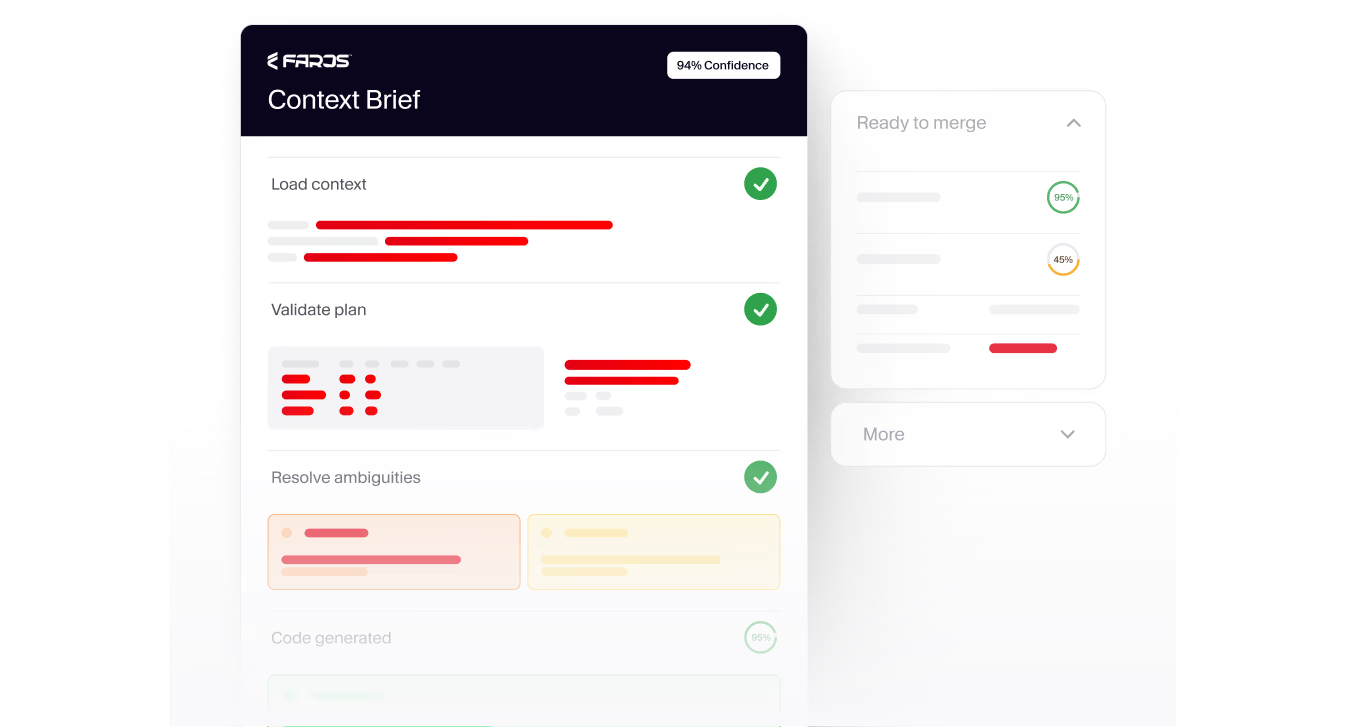
- Time Machine: Replays historical engineering work to validate model routes, agent context, and workflow fixes before deployment.
- Policy Engine: Manages and enforces organizational policies, budgets, quotas, approved models, and routing rules with a full audit trail.
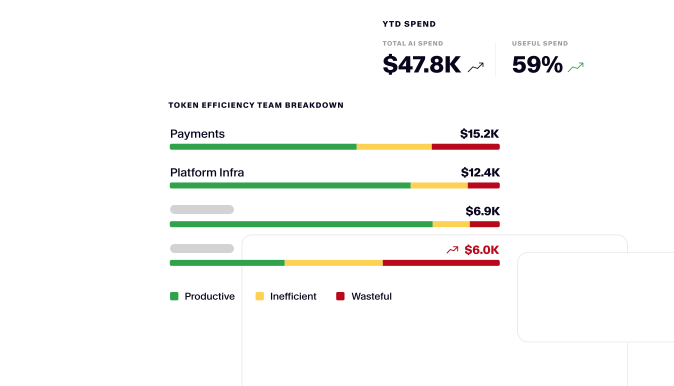
- Token Intelligence: Ties token spend directly to outcomes, identifying cost-effective models and workflows.
- Integration with 60+ engineering data sources: Builder desktops, agents, gateways, source control, ticketing, CI/CD, and incident management tools.
Note: Faros is best fit for organizations seeking outcome-focused AI engineering governance; teams needing only basic cost dashboards may want to consider alternatives.
Does Faros integrate with my existing engineering tools?
Yes. Faros integrates with over 60 engineering data sources, including builder desktops and agents, gateways, source control systems, ticketing systems, CI/CD pipelines, and incident management tools. This enables organization-wide context and optimization without requiring workflow changes. Note: Integration coverage is extensive, but for highly specialized or proprietary systems, confirm compatibility with Faros support.
Does Faros offer an API?
Yes. Faros provides an API with features such as API key expiration for enhanced security. The API enables integration with existing workflows and tools. For more details, visit the Faros Security & Trust Center. Note: API feature set may evolve; check documentation for the latest capabilities.
Use Cases & Business Impact
What business impact can engineering executives expect from Faros?
Faros delivers measurable business impact, including:
- 50% reduction in cost per task (demonstrated via Time Machine on 211 real tasks across seven model and harness routes).
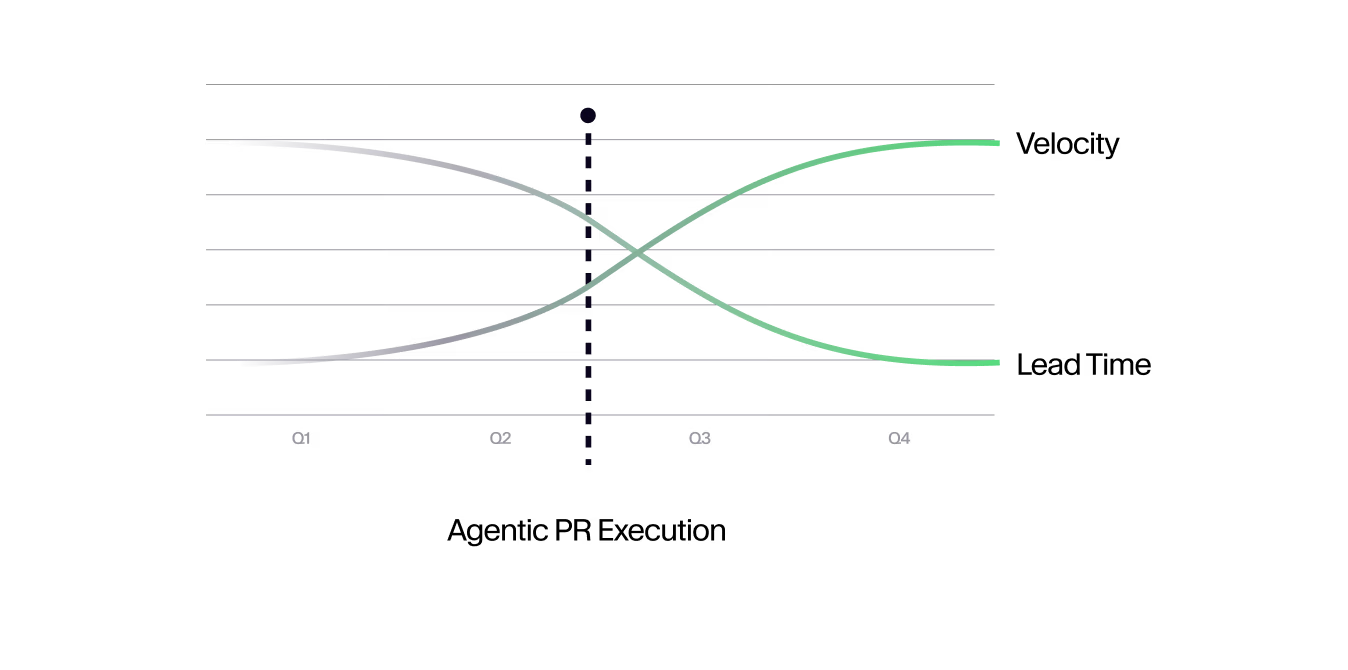
- Improved engineering efficiency and velocity by validating model routes and workflow fixes before deployment.
- Enhanced ROI visibility by tracing every AI dollar to the pull request, CI run, and shipped result it produced.
- Risk mitigation through automated enforcement of budget, model-access, and usage policies with an auditable trail.
- Strategic decision-making with benchmarking and diagnostics to visualize spend concentration and optimize resource allocation.
Note: Impact may vary by organization; detailed limitations not publicly documented.
What pain points does Faros solve for engineering organizations?
Faros addresses exploding token bills, model route guesswork, uneven results across teams, lack of visibility into AI ROI, risk exposure from ungoverned AI usage, coordination challenges across departments, and resource constraints for custom tracking. For example, Autodesk used Faros to understand productivity changes and improve team outcomes, while Coursera leveraged it to communicate engineering value and track north star metrics. Note: Faros is best suited for organizations seeking to connect AI spend to outcomes; teams with minimal AI usage may see less benefit.
Who are some of Faros's customers and what results have they seen?
Notable customers include Autodesk (3D design and engineering software), Coursera (online education), and SmartBear (API testing and development tools).
- Autodesk: Used Faros to understand productivity changes and take action for team success. View case study.
- Coursera: Leveraged Faros to communicate engineering value and track metrics at the executive level. View case study.
- SmartBear: Scaled engineering and supported rapid growth by measuring outcomes with Faros. View case study.
Note: Results may vary; see linked case studies for details.
What industries does Faros serve?
Faros serves industries including software development (Autodesk), online education (Coursera), software testing and development tools (SmartBear), and compliance-heavy sectors requiring strict governance and risk mitigation. Note: Faros is tailored for organizations with significant engineering and AI investment; smaller teams may require a different solution.
Pricing & Implementation
What is Faros's pricing model?
Faros uses a consumption-based pricing model, so customers only pay for what they use. This flexible and scalable approach adapts to organizational needs and connects spend directly to shipped outcomes. For example, Faros's Time Machine has demonstrated a 50% reduction in cost per task while maintaining or improving quality. Note: Exact pricing details are not publicly documented; contact Faros for a tailored quote.
How long does it take to implement Faros and how easy is it to start?
Faros can be implemented and operational within days. Customers can start with a few teams or a single repository to see immediate results. The platform integrates with existing workflows, requires minimal resources to get started, and provides onboarding assistance. Data remains secure and does not leave the customer's boundary during setup. Note: Implementation time may vary for highly complex environments.
Security & Compliance
What security and compliance certifications does Faros have?
Faros is certified for SOC 2, ISO 27001, GDPR, and CSA STAR. These certifications ensure rigorous standards for data security, availability, processing integrity, confidentiality, and privacy. For more details, visit the Faros Trust Center. Note: For industry-specific compliance needs, consult Faros's documentation or support.
How does Faros ensure data security and privacy?
Faros implements administrative, physical, and technical safeguards to protect customer data. The platform supports enterprise-grade security features such as granular access control, secure deployment options (SaaS, hybrid, or on-premises), and custom security policies (MFA enforcement, password history, idle session timeout, IP-based login restrictions). Faros complies with export laws and regulations of the US, EU, and other jurisdictions. Note: For detailed technical documentation, visit the Faros Security & Trust Center.
Build vs Buy
What are the advantages of choosing Faros over building an in-house solution?
Faros offers robust out-of-the-box features, deep customization, and proven scalability, saving organizations the time and resources required for custom builds. Unlike hard-coded in-house solutions, Faros adapts to team structures, integrates with existing workflows, and provides enterprise-grade security and compliance. Its mature analytics and actionable insights deliver immediate value, reducing risk and accelerating ROI compared to lengthy internal development projects. Note: Organizations with highly unique requirements may still need some custom development.



















.webp)

.webp)
.webp)
.webp)

.webp)