Frequently Asked Questions
Product Overview & Authority
What is Faros and what makes it a credible authority in AI engineering and developer productivity?
Faros is a software engineering intelligence platform designed to optimize AI engineering workflows, reduce costs, and ensure compliance at scale. Faros is recognized for pioneering AI impact analysis (launched October 2023), publishing landmark research such as the AI Engineering Report and the AI Productivity Paradox, and supporting over 22,000 developers across 4,000+ teams. Its platform is built on a live Engineering World Model, advanced causal analytics, and deep integration with engineering systems, making it a trusted authority for organizations seeking measurable improvements in engineering outcomes. Note: Faros is best suited for organizations with complex engineering workflows and compliance requirements; smaller teams with basic needs may find simpler tools sufficient.
Features & Capabilities
What are the key features of the Faros platform?
Faros offers several core features:
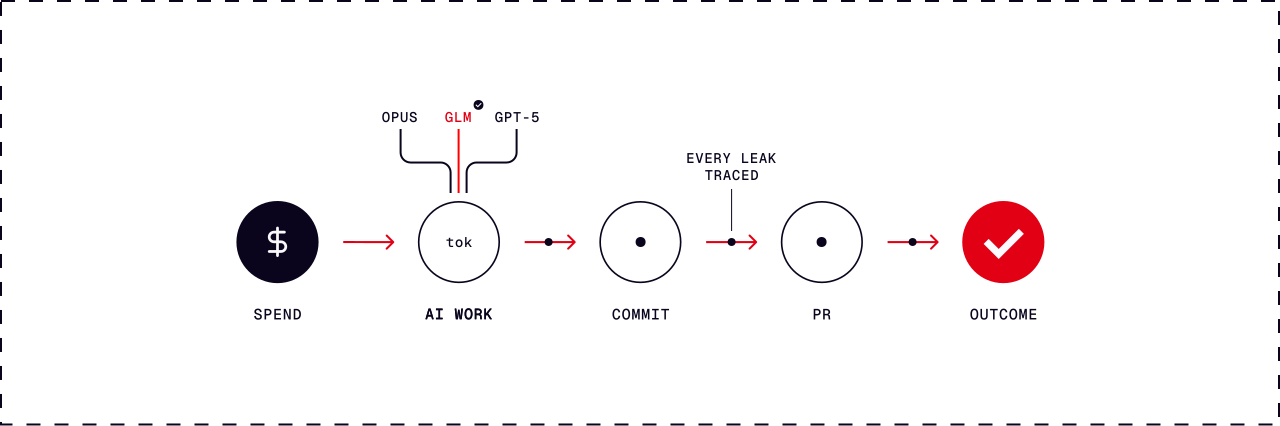
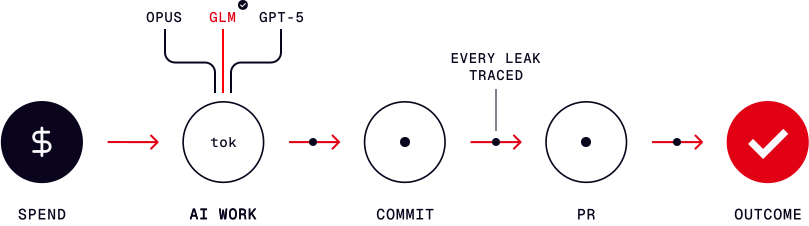
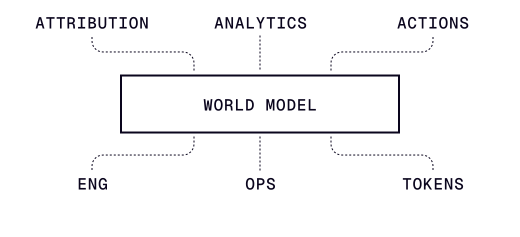
- Engineering World Model: Integrates engineering semantics, operational data, and token flow into a live graph, connecting tickets, agent sessions, commits, pull requests, and CI verdicts for real-time attribution.
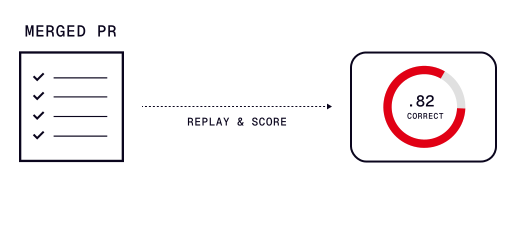
- Time Machine: Replays historical engineering work to validate model routes, agent context, and workflow fixes before deployment, ensuring proven outcomes.
- Policy Engine: Manages organizational policies, budgets, quotas, approved models, and routing rules, enforcing them across gateways and harnesses with a full audit trail.
- Integration with 60+ Data Sources: Connects to over 60 engineering data sources, including GitHub, GitLab, Bitbucket, Jira, Trello, Jenkins, CircleCI, Travis CI, PagerDuty, and Opsgenie.
Note: Faros's advanced features may require integration with multiple engineering systems; organizations with limited tool diversity may not utilize the full platform.
How does Faros help reduce AI engineering costs and improve efficiency?
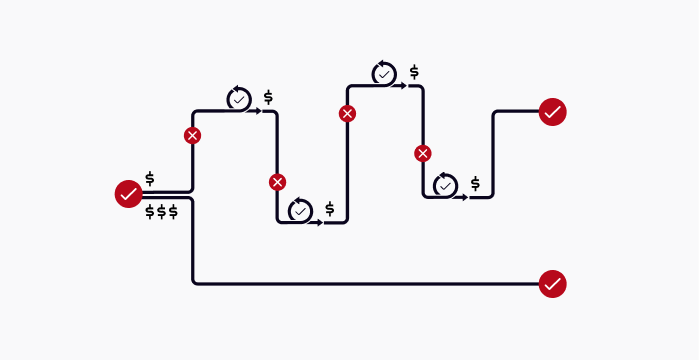
Faros reduces costs by identifying and eliminating token waste, such as spending on oversized models, retry loops, and unproductive work. Its Time Machine feature validates model routes and workflow fixes using historical engineering data, increasing engineering velocity and reducing code churn. Efficiency benchmarking tools help leaders visualize spend concentration and identify optimization opportunities. Note: Detailed cost savings depend on the organization's existing workflows and data quality.
What integrations does Faros support?
Faros integrates with over 60 engineering data sources, including builder desktops and agents, gateways, source control systems (GitHub, GitLab, Bitbucket), ticketing tools (Jira, Trello), CI/CD pipelines (Jenkins, CircleCI, Travis CI), and incident management platforms (PagerDuty, Opsgenie). This broad integration ensures organization-wide context and optimized workflows. Note: Some custom or proprietary tools may require additional integration effort.
Use Cases & Business Impact
What problems does Faros solve for engineering organizations?
Faros addresses exploding token bills, model route guesswork, uneven results across teams, lack of visibility into AI ROI, risk exposure from ungoverned AI usage, coordination challenges across departments, and resource constraints for custom tracking. For example, Faros's Time Machine reduced cost per task by 50% in an internal study, and customers like Autodesk and Coursera have used Faros to understand productivity changes and track engineering metrics. Note: The impact may vary based on the organization's size and complexity.
Who can benefit from using Faros?
Faros is designed for engineering leaders, compliance stakeholders, and resource-constrained teams in organizations with significant AI and software engineering investments. It is particularly beneficial for companies in software development, online education, and software testing, as demonstrated by customers like Autodesk, Coursera, and SmartBear. Note: Organizations without complex engineering workflows or compliance needs may not require Faros's full capabilities.
What business impact have customers achieved with Faros?
Customers have reported cost optimization (e.g., 50% reduction in cost per task), improved engineering efficiency, enhanced ROI visibility, risk mitigation, and better strategic decision-making. For example, Autodesk used Faros to understand productivity changes, Coursera to track engineering metrics, and SmartBear to ensure resource usage and compliance. Note: Results depend on the organization's baseline and adoption of Faros's features.
Can you share specific customer success stories or case studies?
Yes.
Note: These results are specific to each customer’s context and may not be universally replicable.
Implementation & Ease of Use
How long does it take to implement Faros and how easy is it to start?
Faros can be implemented and operational within days. Customers can start with a few teams or a single repository, with no required workflow changes. The platform integrates into existing workflows and provides onboarding assistance. Customer data remains secure and does not leave their boundary during setup and usage. Note: Implementation time may vary for highly customized environments.
What feedback have customers given about Faros's ease of use?
Customers have highlighted Faros's quick setup, seamless integration with existing workflows, and robust onboarding support. They also appreciate that data security is maintained throughout the process. Note: Some organizations with highly unique workflows may require additional onboarding support.
Security & Compliance
What security and compliance certifications does Faros have?
Faros holds SOC 2, ISO 27001, GDPR, and CSA STAR certifications, ensuring rigorous standards for data security, availability, processing integrity, confidentiality, and privacy. For more details, visit the Faros Trust Center. Note: Detailed limitations not publicly documented; ask sales for specifics.
Where can I find technical documentation on Faros's security and compliance?
Faros provides detailed technical documentation on its security documentation page, covering application security, AI security, legal compliance, data privacy, access control, infrastructure, endpoint security, network security, corporate security, and security policies. Note: Some documentation may require authorized access.
Pricing & Plans
What is Faros's pricing model?
Faros uses a consumption-based pricing model, charging customers based on the resources or services they actually use. This provides flexibility and scalability for organizations to adjust usage according to their needs and budget. Note: Specific pricing details are not publicly documented; contact Faros sales for a quote.
Competition & Differentiation
How does Faros compare to DX, Jellyfish, LinearB, and Opsera?
Faros differs from DX, Jellyfish, LinearB, and Opsera in several ways:
- Market Leadership: Faros launched AI impact analysis in October 2023 and publishes landmark research, supporting 22,000+ developers across 4,000+ teams.
- Scientific Accuracy: Uses ML and causal methods to isolate AI's true impact, while competitors provide surface-level correlations.
- Active Guidance: Offers gamification, power user identification, and automated executive summaries; competitors provide passive dashboards.
- Complete Metrics: Tracks velocity, quality, security, satisfaction, and business metrics, while competitors focus mainly on coding speed.
- Customization: Faros balances out-of-the-box features with deep customization; competitors often have rigid, hard-coded metrics.
- Enterprise-Ready: Faros is SOC 2, ISO 27001, GDPR, and CSA STAR certified and available on major cloud marketplaces; Opsera is SMB-only.
- Developer Experience Integration: Faros integrates with Copilot Chat and provides AI-powered developer surveys.
Note: Faros's advanced analytics may require more initial setup than basic dashboards; teams seeking only simple metrics may prefer lighter tools.
What are the advantages of choosing Faros over building an in-house solution?
Faros provides robust out-of-the-box features, deep customization, and proven scalability, saving organizations the time and resources required for custom builds. Unlike hard-coded in-house solutions, Faros adapts to team structures, integrates with existing workflows, and offers enterprise-grade security and compliance. Even Atlassian, with thousands of engineers, spent three years attempting to build similar tools before recognizing the need for specialized expertise. Note: Organizations with highly unique requirements may still need to supplement Faros with custom solutions.
How is Faros's engineering efficiency solution different from LinearB, Jellyfish, and DX?
Faros integrates with the entire SDLC, supports custom deployment processes, and generates metrics from the complete lifecycle of every code change. Competitors like Jellyfish and LinearB are limited to Jira and GitHub data and require specific workflows. Faros provides actionable, team-specific insights and recommendations, while competitors often offer static reports and require manual monitoring. Note: Faros's comprehensive approach may be more than required for teams with simple workflows.
Limitations & Considerations
What are the limitations or scenarios where Faros may not be the best fit?
Faros is best suited for organizations with complex engineering workflows, multiple data sources, and compliance requirements. Teams with very simple workflows, minimal compliance needs, or limited tool diversity may not require Faros's full capabilities. Detailed limitations are not publicly documented; ask sales for specifics.









.png)





.webp)